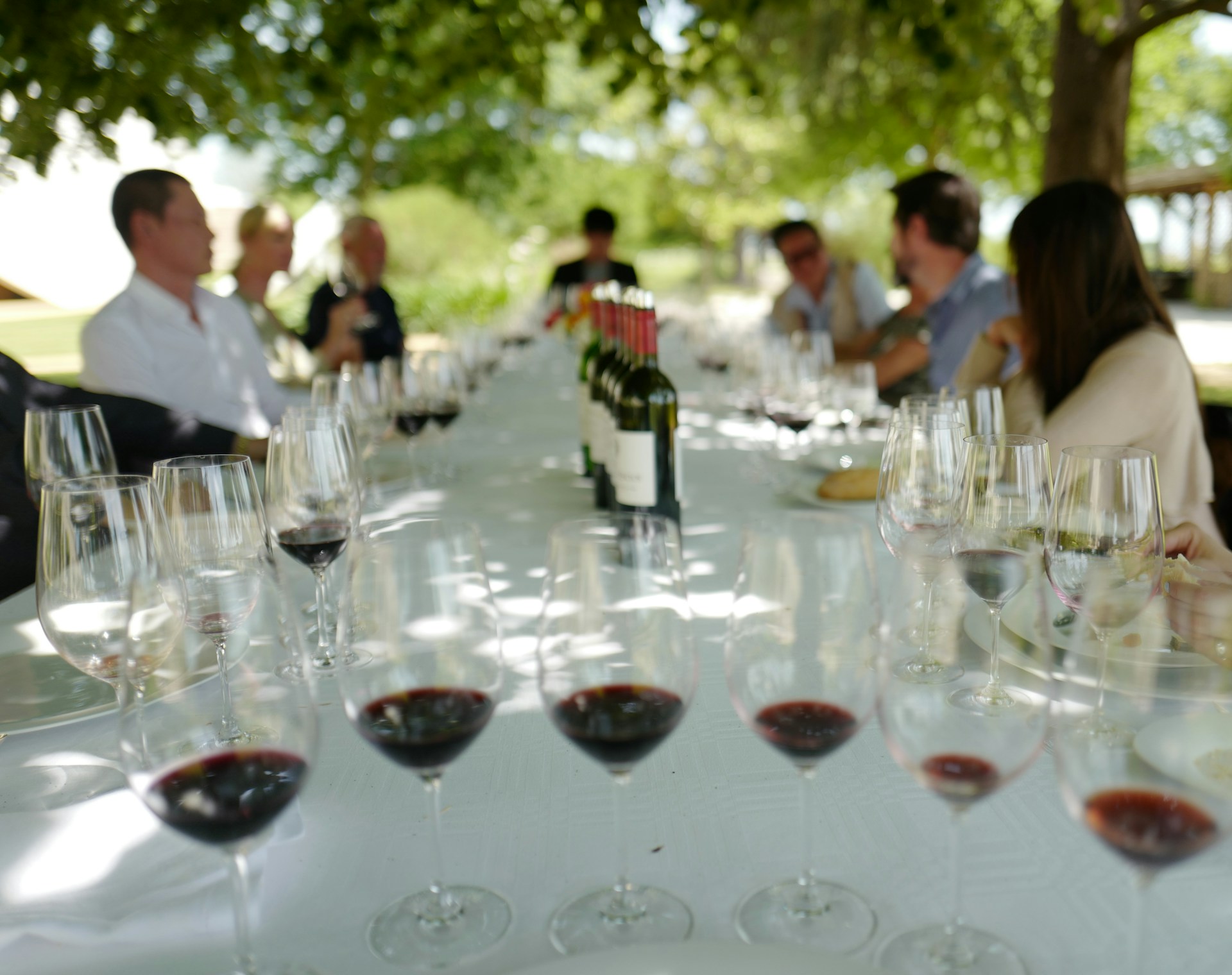
Introduction to French Wine
In this post we’ll introduce you to French wine. First, we’ll start with a brief history of wine making in France. Then, we’ll turn to some key concepts related to wine. After that, we’ll take a closer look at a few of the major French wine making regions. We’ll learn about the kinds of grapes used in the region and get a taste for the typical flavor profiles that come out of those regions. Throughout, you’ll learn some key French vocabulary related to wine.
Of course, in a short blog post, we can only skim the surface of French wine. There’s so much to learn and enjoy that you can spend a lifetime familiarizing yourself with French wines. Hopefully this short introduction will inspire you to explore on your own, whether that means visiting a vineyard in the Loire Valley or grabbing a bottle of some AOC that you haven’t tried.

Un bon vin français : A good French wine
Many consider France to be the spiritual home of fine wine. That’s not a surprising sentiment. France produces elegant vins rouges (red wines), crisp vin blancs (white wines), playful vins rosés (rosés) and celebratory champagnes and crémants (sparkling wines). French bottles have shaped global standards of quality, classification, and tradition. Understanding French wine can seem intimidating at first, but the truth is much less intimidating. Once you grasp a few essential concepts and regions, the system becomes beautifully logical.
At the heart of French wine culture is the idea that wine expresses place. This is clear even in the way that French wine is labeled. In the US and many other countries, wines focus on the grape varietal – pinot noir or merlot or pinot gris. In France, wine labels focus on the origin of the wine — the village, region, or vineyard. This reflects a deep respect for terroir (the natural environment that shapes a wine’s character), a concept central to French wine making.
Brief History of French Wine
Wine making in France dates back over 2,000 years. The Romans introduced viticulture to much of Gaul. They planted early vignes (vines) that would eventually form the backbone of today’s prestigious vignobles (vineyards or wine-growing regions). During the Middle Ages, monasteries carefully cultivated vineyards, refining techniques and mapping the best plots of land.
In the 19th century, a wine blight spread through many French vignobles. It was caused by a New World insect known as phylloxera, and it devastated French wine making. Thankfully, grafting European vines onto American rootstock saved the industry. In the 20th century, France formalized quality standards through systems such as AOC – Appellation d’Origine Contrôlée (controlled designation of origin). This system strictly regulates grape varieties, production methods, and geographic boundaries to preserve authenticity.
Today, the French wine industry remains one of the largest and most influential in the world. France produces roughly 50–60 million hectolitres of wine annually — the equivalent of about 7–8 billion bottles each year. This makes France one of the world’s top producers by volume. French wines are a major export product. In recent years France has regularly led global wine export value, with shipments worth around €12 billion–€15 billion annually. These exports represent a significant slice of the country’s overall trade in agricultural products. The domestic French wine market remains strong; French consumers drink billions of glasses at home and in restaurants. But the industry faces challenges today from shifting global demand, changing consumption habits, and climate pressures. Still, the vignobles of France continue to attract tourists and connoisseurs from around the world, reinforcing wine’s deep cultural and economic importance in contemporary France.
Varietals, Styles, and Terroir
France grows a wide range of grape cépages (varieties). Some of the most important red grapes include Cabernet Sauvignon (a structured red grape with dark fruit flavors), Merlot (a softer, plum-forward red grape), Pinot Noir (a light-bodied red with red fruit and earthy notes), and Syrah (a bold red with spice and dark fruit). Key white grapes include Chardonnay (a versatile white grape), Sauvignon Blanc (a crisp, aromatic white grape), Chenin Blanc (a versatile fruity grape with honey or chamomile notes), and Riesling (a high-acidity white grape often with floral notes).
French wines are frequently labeled by place rather than grape. A bottle may indicate a specific cuvée (a particular blend or batch of wine) from a certain appellation. The identity of that wine is tied to its terroir (soil, climate, topography, and human tradition). Chalky soils, limestone slopes, gravel beds, maritime breezes — all influence how grapes ripen and how the wine tastes.
The AOC – Appellation d’Origine Contrôlée (controlled designation of origin) system ensures that wines reflect regional standards. For example, if a label says “Chablis,” it must come from that defined region and follow its rules. This protects both producers and consumers, linking wine quality directly to geography.
Major Wine Regions of France
France has several principal wine regions, each with distinctive grapes and styles. Let’s take a very brief look at them here.
Bordeaux
Located in southwestern France, Bordeaux is famous for structured red blends. The left bank of the Gironde River emphasizes Cabernet Sauvignon (a tannic, age-worthy red grape). This varietal produces powerful wines with blackcurrant, cedar, and tobacco notes. The right bank leans toward Merlot (a softer red grape), which offers plum, chocolate, and velvety textures. Bordeaux also produces crisp dry whites and sweet wines like Sauternes. Classic pairings include roast lamb, steak, and aged cheeses.
Burgundy (Bourgogne)
In Burgundy, simplicity reigns: reds are primarily made from Pinot Noir (a delicate red grape), and whites from Chardonnay (a versatile white grape). Burgundy wines highlight subtle expressions of terroir. Pinot Noir from this region shows red cherry, mushroom, and earthy notes, pairing beautifully with roast chicken or duck. Chardonnay ranges from mineral-driven and lean in Chablis to richer, buttery styles in Côte de Beaune.
Champagne
Champagne produces the world’s most famous sparkling wines, made primarily from Chardonnay (a white grape), Pinot Noir (a red grape), and Pinot Meunier (a fruit-forward red grape). Secondary fermentation in the bottle creates fine bubbles. Flavors range from green apple and citrus to brioche and almond. Champagne pairs not only with celebrations but also with oysters, fried foods, and creamy dishes.
Remember, champagne is only from Champagne. Other regions produce sparkling wines, but they are called vin mousseux. If the wine is made using the traditional Champagne method (second fermentation in the bottle) but comes from another region, it’s usually called crémant.
Loire Valley
The Loire Valley is diverse and famous for fresh, high-acid wines. Sauvignon Blanc (a crisp, aromatic white grape) from Sancerre offers citrus and grassy notes, ideal with goat cheese and seafood. Chenin Blanc (a versatile white grape) produces styles from dry to sweet, often with apple and honey flavors. Light reds from Cabernet Franc (a medium-bodied red grape) show red berry and herbal tones.
Rhône Valley
The Rhône region is divided into north and south. Northern Rhône focuses on Syrah (a bold red grape), producing spicy, peppery wines with blackberry flavors that pair well with grilled meats. Southern Rhône blends include Grenache (a fruit-forward red grape), often combined with Syrah and Mourvèdre, creating warm, herbal wines ideal with Mediterranean cuisine.
Alsace
Bordering Germany, Alsace specializes in aromatic whites such as Riesling (a high-acid white grape), Gewurztraminer (a floral, spicy white grape), and Pinot Gris (a rich, textured white grape). These wines are often labeled by grape variety and pair wonderfully with spicy dishes, pork, and Alsatian cuisine.
Exploring French Wines
French wine is ultimately a journey through geography and tradition. By learning a few key terms — terroir (the character of place), AOC – Appellation d’Origine Contrôlée (controlled designation of origin), cuvée (a specific blend or batch), vigne (vine), and vignoble (vineyard or wine-growing region) — you unlock a deeper appreciation of how France connects land, grape, and glass.
If you’re new to French wine, the best way to discover it is to experience it in person. Visiting a local domaine (wine estate) or château (wine estate, often historic) allows you to walk through the vignoble (vineyard) and see the vignes (grapevines) up close. Many producers offer guided dégustations (tastings), where you can sample different cuvées (specific blends or batches) and learn about the role of terroir. Don’t hesitate to ask about the cépage (grape variety) or whether the wine is a vin monocépage (single-variety wine) or a blend. Even if you can’t travel to France, look for structured tastings at a local wine shop and compare wines from different appellations (designated wine regions). The key is to taste slowly, take notes, and enjoy the process — or as the French might say, bonne dégustation ! (enjoy the tasting!)

Get on the road to speaking French with the Language Garage!
We hope you’ve enjoyed learning about French wines. If you’d like to learn more:
- Follow us on Facebook, LinkedIn, BlueSky, Twitter, Threads, Mastodon, Instagram, or Pinterest. We publish lots of French vocabulary, grammar, and culture notes, so it’s a great way to pick up some new vocabulary and practice.
- Check out our other posts on French language, culture, and more.
- Enroll in affordable, flexible, and personalized private online French lessons or sign up for a small group online French class.
- Create a free Language Garage account to access tons of French vocabulary, grammar, and culture.
Photo by Jennifer Yung on Unsplash