Celebrating Madaraka Day: Kenya’s Journey to Self-Governance
Every year on June 1st, Kenyans across the country commemorate Madaraka Day. This public holiday marks the moment Kenya attained internal self-rule from British colonial powers in 1963. The word madaraka in Swahili means authority or self-governance. This day celebrates the first major step toward full independence, which the country later achieved on December 12th, 1963. Jamhuri Day marks the latter. As one of Kenya’s most important sikukuu za kitaifa (national holidays), Madaraka Day is a time for both remembrance and celebration.
Origins and Historical Background of Madaraka Day
Before 1963, Kenya was under British colonial rule for over six decades. The struggle for independence was long and difficult. A major step toward this goal was the Mau Mau uprising of the 1950s and the efforts of nationalist leaders like Jomo Kenyatta, Tom Mboya, and Oginga Odinga. On June 1, 1963, Kenya gained internal self-government, making it possible for Kenyans to govern themselves for the first time since colonization. This change meant that Kenya had its own Waziri Mkuu (Prime Minister), cabinet, and legislative authority. However, the British monarch remained the head of state until full independence was achieved later that year.
Madaraka Day, therefore, symbolizes the moment when Kenyans took control of their political destiny. It celebrates a major step in the transition from colonial rule to self-determination.
How Madaraka Day Is Celebrated
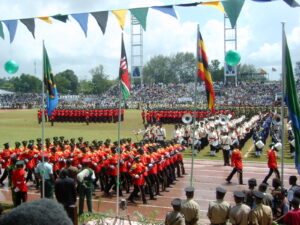
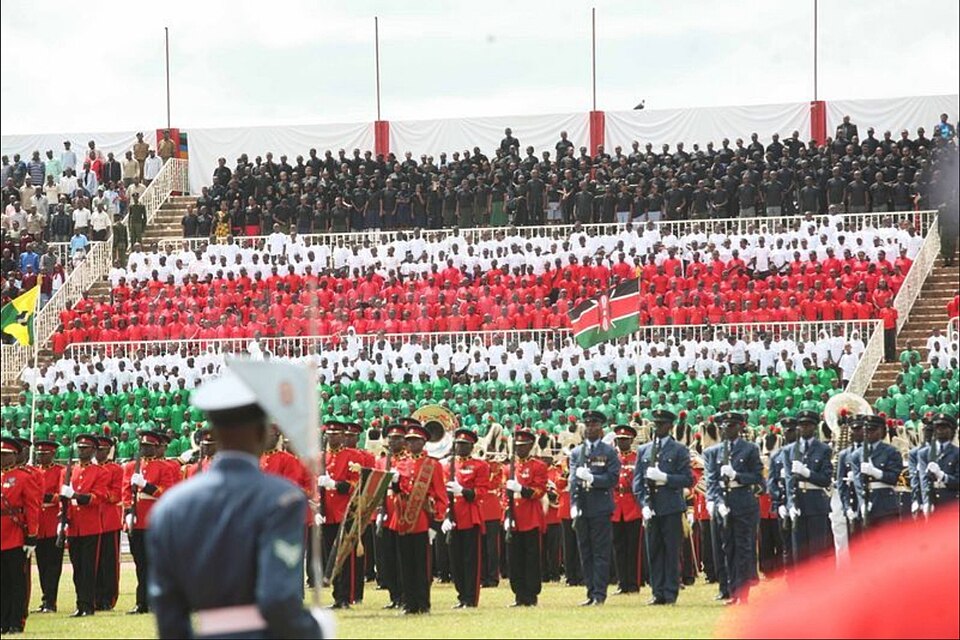
Madaraka Day celebrations typically include national ceremonies, gwaride (parades), and hotuba za umma (public speeches). Counties of Kenya host the main event in a rotating fashion, welcoming the President and other dignitaries along with the national spotlight. The day begins with a military parade by the Majeshi ya Ulinzi ya Kenya (Kenya Defence Forces) and flag-raising ceremonies. The President delivers a hotuba ya kitaifa (national address), highlighting the country’s progress and laying out plans for the future.
Cultural performances, including ngoma za asili (traditional dances), muziki (music), and ushairi (poetry) are also common. Schools and community groups often participate in performing mashairi (poems) and ngoma za kitamaduni (folk dances). These showcase Kenya’s rich cultural diversity.
For many Kenyans, Madaraka Day is a day of reflection and a day off from work. This of course makes it a good time to spend with family and friends. Many families gather to share chakula cha pamoja (a communal meal).
Significance Compared to Other Holidays
Jamhuri Day on December 12 marks Kenya’s full independence and establishment as a republic. But Madaraka Day holds a special place as the beginning of self-rule. It represents the first major achievement in the independence journey and the dawn of Kenyan political agency. Compared to other holidays like Mashujaa Day (Heroes Day, October 20), which honors national heroes, Madaraka Day focuses more on the institutional and constitutional transition from colonial rule to Kenyan leadership.
In this way, Madaraka Day is not only a celebration but also a reminder of the responsibilities of raia wa Kenya (Kenyan citizens) to uphold democracy, justice, and unity. As you might capture the sentiment in Swahili: Tuwe na mshikamano na tuendelee mbele kama taifa moja. Let us be united and move forward as one nation.

Get on the road to speaking Swahili with the Language Garage!
We hope you’ve enjoyed learning about Kenya’s Madaraka Day. If you’d like to learn more:
- Follow us on Facebook, LinkedIn, BlueSky, Twitter, Threads, Mastodon, Instagram, or Pinterest. We publish lots of Swahili vocabulary, grammar, and culture notes, so it’s a great way to pick up some new vocabulary and practice.
- Check out our other posts on Swahili language, culture, and more.
- Enroll in affordable, flexible, and personalized private online Swahili lessons or sign up for a small group online Swahili class.
- Create a free Language Garage account to access tons of Swahili vocabulary, grammar, and culture.
Image Source Wikimedia Commons