Korea’s Chilseok: The Mid-Summer Star Festival
칠석 Chilseok (literally, Seventh Evening) is a traditional Korean festival that takes place on the seventh day of the seventh month of the lunar calendar. This means that it normally falls in August, although the date varies from year to year. Like Japan’s 七夕 Tanabata and China’s 七夕节 Qīxì Jié, Korea’s Chilseok has its roots in an old East Asian legend of two lovers separated by the 은하수 eunhasu (Milky Way).
Origins and History of Korea’s Chilseok
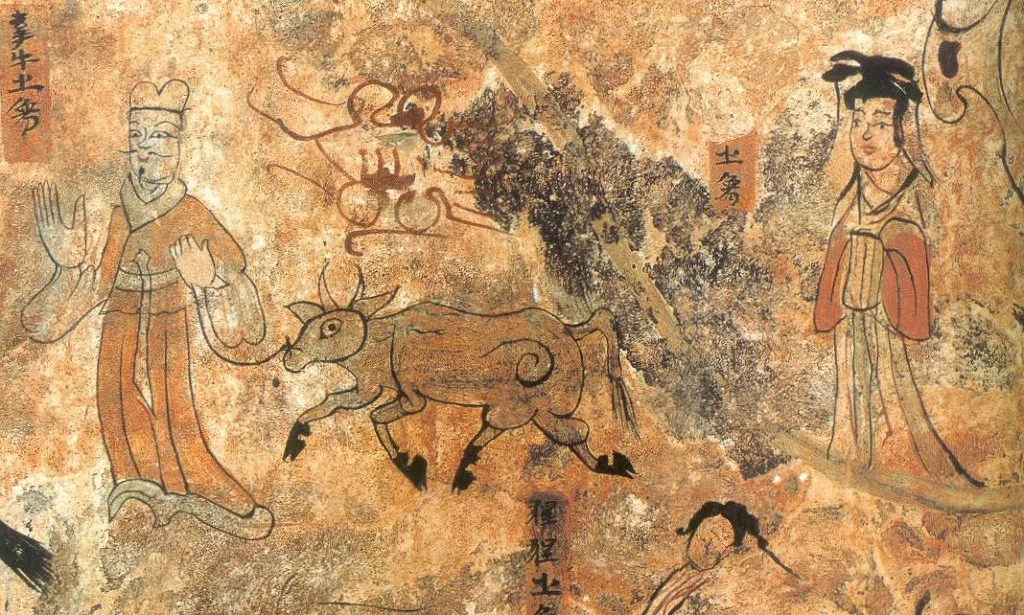
The Chilseok story comes from Chinese mythology, introduced to Korea during the 삼국시대 Samguk Sidae (Three Kingdoms Period). It tells of 견우 Gyeon-u (the Cowherd) and 직녀 Jiknyeo (the Weaver Maid), celestial beings who fell in love. Neglecting their heavenly duties, they angered the Jade Emperor, who separated them by the Milky Way. Out of compassion, he allowed them to meet only once a year—on the seventh day of the seventh lunar month. They did this by crossing a bridge formed by magpies and crows.
In traditional Korean society, Chilseok was also tied to agricultural cycles. The day often marked the beginning of the end of the hot summer season. At this time, 김장 gimjang (kimchi-making season) was still far off, but farmers were attentive to rainfall and crop conditions. According to belief, 칠석비 Chilseok-bi (Chilseok rain) made fabrics rot faster, so people avoided washing clothes on that day.
Customs and Celebrations of Korea’s Chilseok
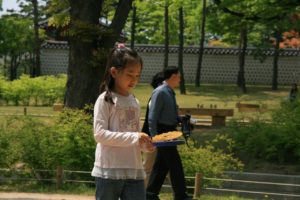
Historically, women would perform rituals to the 직녀성 Jiknyeo-seong (Vega star), praying for skill in weaving and sewing. Girls might offer food to the stars, hoping for dexterity in domestic crafts and a happy marriage.
A distinctive custom was eating seasonal foods made from freshly harvested grains and vegetables. Noodles called 밀국수 mil-guksu (wheat noodles) were especially popular, because wheat was harvested just before Chilseok. Another traditional dish is 칠석백설기 Chilseok baekseolgi (white rice cake steamed for Chilseok). This dish symbolized purity and good fortune. People also enjoyed 참외 chamoe (melons) and 오이 oi (cucumbers), as they were in season and considered refreshing.
Some communities held outdoor gatherings or small folk games, especially in rural areas. Families would share meals under the evening sky, symbolically joining Gyeon-u and Jiknyeo in their reunion.
Days Off and Public Observance
Unlike 추석 Chuseok (Korean harvest festival) or 설날 Seollal (Lunar New Year), Chilseok is not a national public holiday today. This means that there are no official days off. In the past, however, it was part of the 세시풍속 seshi pungsok (seasonal customs), and people treated it as a special day.
Modern observance is more symbolic than widespread. Folklore centers, cultural heritage villages, and some Buddhist temples host events marking the day. Sometimes they incorporate the star-crossed lovers’ legend into performances or storytelling.
Significance in Modern Korea
Today, Korea’s Chilseok is mostly a cultural or folk holiday. The original myths had their roots in folk beliefs and astrology, which were far more important in the past. Today, Chilseok serves as a reminder of Korea’s agricultural past, traditional crafts, and seasonal eating habits. In urban areas, cultural enthusiasts, historians, or fans of folk events are most likely to know about the holiday.
However, its romantic imagery still resonates. Children’s books tell the story of the 견우와 직녀 Gyeon-u wa Jiknyeo (Cowherd and Weaver Girl). Often students learn of it in school as part of literature and culture lessons. Seasonal menus in some restaurants feature 밀국수 milgugsu (wheat noodles)or 백설기 baegseolgi (white rice cakes) to mark the date. Cultural TV programs may air dramas or documentaries about the legend.
For many, Chilseok is also a chance to reflect on the cycles of nature. Modern Koreans may consider how traditional life revolved around harvests, seasonal foods, and star patterns. In this way, the holiday preserves a link to the past while offering a poetic pause in the height of summer. So, while it may not be a major public holiday anymore, Chilseok remains a gentle reminder that love, craft, and the rhythms of nature have been woven into Korean life for centuries.
칠석 잘 보내세요 (Chilseok jal bonaeseyo) (Have a good Chilseok).

Get on the road to speaking Korean with the Language Garage!
We hope you’ve enjoyed learning about Korea’s Chilseok. If you’d like to learn more:
- Follow us on Facebook, LinkedIn, BlueSky, Twitter, Threads, Mastodon, Instagram, or Pinterest. We publish lots of Korean vocabulary, grammar, and culture notes, so it’s a great way to pick up some new vocabulary and practice.
- Check out our other posts on Korean language, culture, and more.
- Enroll in affordable, flexible, and personalized private online Korean lessons or sign up for a small group online Korean class.
- Create a free Language Garage account to access tons of Korean vocabulary, grammar, and culture.
Image Source Wikimedia Commons