Sushi in Japan: Language, Culture, and Everyday Dining
In this post we’ll learn about sushi in Japan, with a focus on the language and culture related to this world renown dish. 寿司 sushi is one of Japan’s most famous foods, but in Japan it is not just a luxury dish or a special-occasion meal. Sushi is everyday food, fast food, celebratory food, and high art—all at the same time. Understanding how sushi is eaten, ordered, and talked about in Japanese offers a valuable window into Japanese food culture.

When, Where, and How Sushi Is Eaten
First, let’s talk about In Japan, sushi can be eaten almost anytime: for lunch, dinner, or celebrations. You’ll find sushi in many settings, from 寿司屋 sushi-ya (sushi restaurant) to casual 回転寿司 kaiten-zushi (conveyor-belt sushi) chains, department store food halls, and. High-end sushi is often eaten at the counter, where the chef prepares each piece in front of you, while casual sushi is eaten quickly and informally.
Broad Types of Sushi
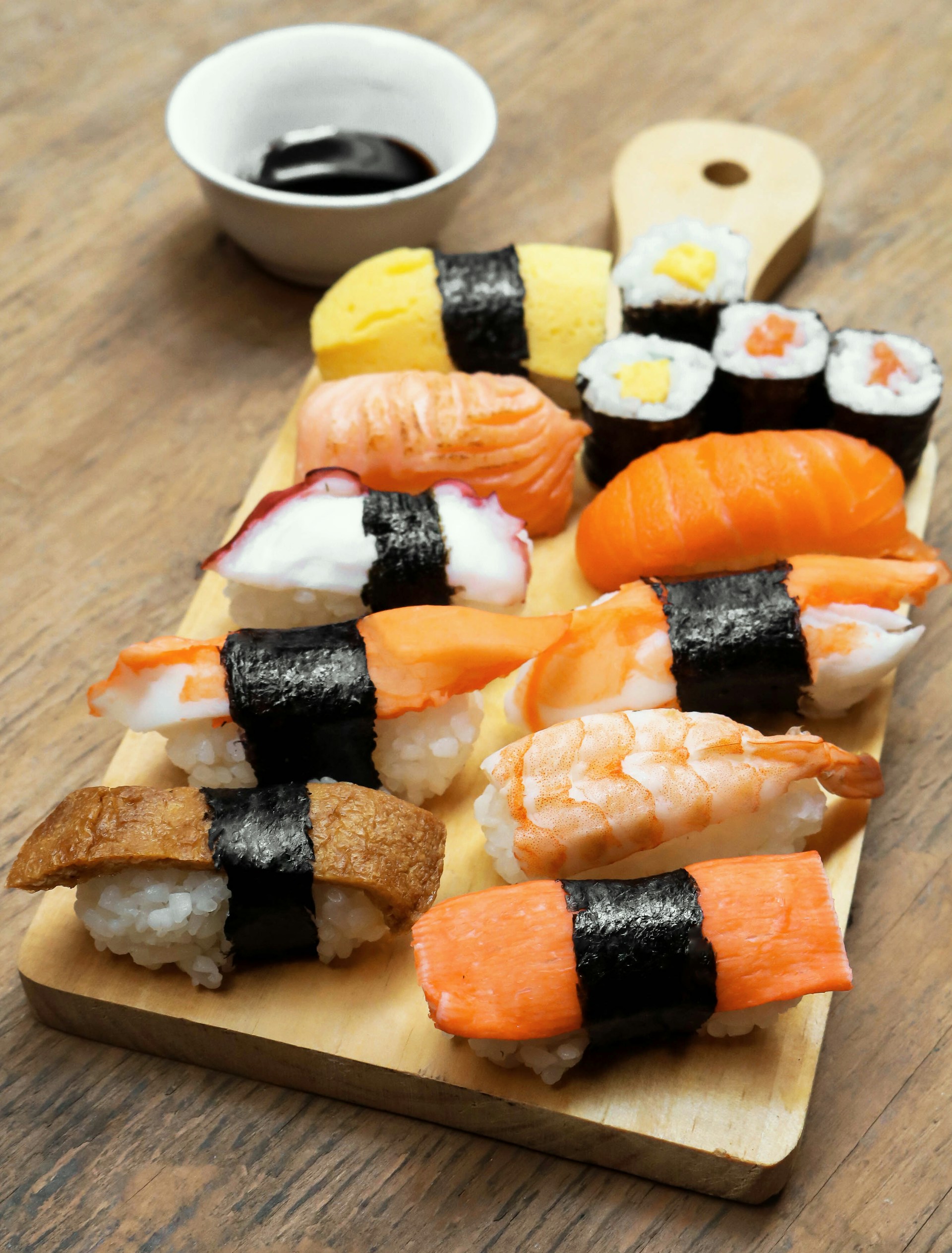
Now let’s talk about different kinds of sushi. Sushi comes in many forms, each with its own name and style:
- 巻き寿司 maki-zushi (rolled sushi): Rice and fillings rolled in 海苔 nori (seaweed) and cut into pieces. This is the classic sushi presentation that’s most common in the West.
- 手巻き寿司 temaki-zushi (hand roll): A cone-shaped roll eaten by hand.
- ちらし寿司 chirashi-zushi (scattered sushi): Sushi rice topped with assorted fish and vegetables.
- 稲荷寿司 inari-zushi: Sushi rice inside sweet 油揚げ abura-age (fried tofu).
- 握り寿司 nigiri-zushi (hand-pressed sushi): A small mound of rice topped with fish or seafood.
Ingredients and Common Toppings
Next, let’s talk about ingredients. At the heart of sushi is 酢飯 sumeshi (vinegared rice), made from rice seasoned with vinegar, sugar, and salt. Popular toppings and fillings include:
- 鮪 maguro (tuna)
- サーモン sāmon (salmon)
- 鯛 tai (sea bream)
- 海老 ebi (shrimp)
- 穴子 anago (saltwater eel)
- 烏賊 ika (squid)
Condiments and sides often include 醤油 shōyu (soy sauce), わさび wasabi (Japanese horseradish), and ガリgari (pickled ginger).
Vegetarians and Vegans
Before we continue, let’s talk a little bit about vegetarians and vegan sushi. Traditional sushi has fish as its main topping. You may be able to find vegetarian options, but you should check out the menu first to be sure. Some vegetarian options include:
- たまご tamago (sweet omelet)
- かっぱ巻き kappa-maki (cucumber roll), named after a folkloric creature named a kappa, who loves to eat cucumber
- 梅しそ巻き ume-shiso-maki (pickled plum with 紫蘇 shiso [perilla leaf])
- 納豆巻き nattō-maki (fermented soybeans)
- 新香巻き shinkō-maki (pickled vegetables, often たくあん takuan, pickled daikon)
You may have a harder time in Japan finding the full range of modern vegetarian rolls (avocado rolls, tempura vegetables, multi-ingredient veggie roll, etc.) that you’re accustomed to in the US. Places that cater to an international clientele might be the exception, but again, you should check the menu to be sure.
Ordering Sushi in Japan
Now, let’s talk about ordering sushi in Japan. Tourists are often surprised by how simple ordering sushi can be. In casual places, you may order by tablet or pick plates directly from the conveyor belt. In traditional restaurants, you speak directly to the chef or staff.
Useful phrases include:
- おすすめは何ですか。
Osusume wa nan desu ka.
What do you recommend? - これをください。
Kore o kudasai.
I’ll have this, please. - マグロをください。
Maguro o kudasai.
Tuna, please. - おまかせでお願いします。
Omakase de onegai shimasu.
I’ll leave it up to the chef.
What Tourists Should Know
Finally, let’s wrap up with a few tips for tourists. In Japan, people usually eat sushi in one bite, especially nigiri. People eat ginger between bites to cleanse the palate, not placed on top of sushi. But, there’s no reason for intimidation — sushi culture values appreciation, not expertise.
If you’re a vegetarian or vegan, don’t assume that you’ll be able to find options easily, especially in traditional sushi restaurants. Also, beware of “hidden” fish products even in something that appears vegetarian. For example, だしdashi often includes bonito flakes. There may be fish ingredients in the seasoning in 稲荷寿司inari-zushi or in some pickles. Some phrases you might want to know are:
- 魚は入っていますか。
Sakana wa haitte imasu ka.
Is there any fish in it? - 魚のだしですか。
Sakana no dashi desu ka.
Is it fish broth?
For learners of Japanese, sushi offers more than great flavor. It provides practical vocabulary, cultural insight, and a delicious way to connect language with everyday life in Japan.

Get on the road to speaking Japanese with the Language Garage!
We hope you’ve enjoyed learning about sushi in Japan. If you’d like to learn more:
- Follow us on Facebook, LinkedIn, BlueSky, Twitter, Threads, Mastodon, Instagram, or Pinterest. We publish lots of Japanese vocabulary, grammar, and culture notes, so it’s a great way to pick up some new vocabulary and practice.
- Check out our other posts on Japanese language, culture, and more.
- Enroll in affordable, flexible, and personalized private online Japanese lessons or sign up for a small group online Japanese class.
- Create a free Language Garage account to access tons of Japanese vocabulary, grammar, and culture.
Photo by Fadya Azhary on Unsplash