Bastille Day: France’s National Celebration of Liberty and Unity
Every year on July 14 (le quatorze juillet), France bursts into celebration with Bastille Day, known in French as la Fête nationale. This national holiday commemorates a pivotal moment in French history—the storming of the Bastille prison in 1789. This event marked the beginning of the French Revolution and symbolized the end of absolute monarchy. Today, Bastille Day is a vibrant blend of history, patriotism, and public festivity, celebrated across France and by French communities worldwide.

Origins and Historical Significance of Bastille Day
The Bastille was a medieval fortress and state prison in Paris that had become a symbol of royal tyranny. On July 14, 1789, angry Parisians stormed the fortress, demanding the release of political prisoners and the abolition of the monarchy’s oppressive policies. Though only a few prisoners were actually held inside at the time, the event had enormous symbolic power. It galvanized the French people and signaled the rise of the values that would define the new republic: liberté, égalité, fraternité (liberty, equality, fraternity).
The first official celebration of Bastille Day occurred a year later, in 1790, as la Fête de la Fédération, commemorating national unity. However, it wasn’t until 1880 that July 14 formally became a public holiday under the Third Republic. Since then, Bastille Day has become a powerful symbol of la fierté nationale (national pride) and democratic ideals.
Modern Celebrations of Bastille day Across France
Bastille Day is marked by both solemn commemoration and festive celebration. It is un jour férié (a public holiday) across France. This means that most people have the day off from work. Schools, offices, and many businesses close, allowing citizens to take part in the numerous events that occur throughout the country.
Military Parade on the Champs-Élysées
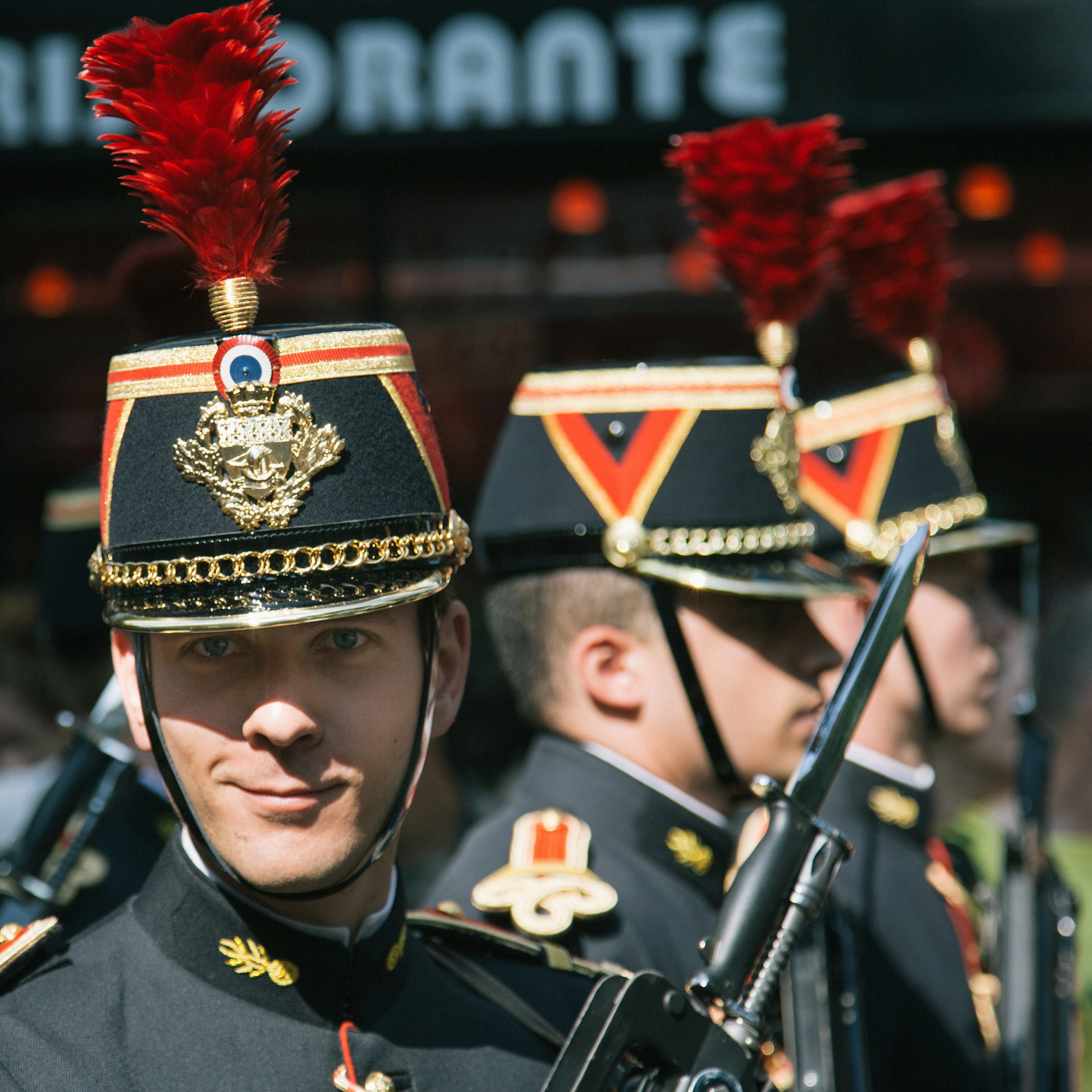
The most iconic event of the day is le défilé militaire (the military parade) held in Paris on the Champs-Élysées. This tradition began in 1880 and continues to be the largest and oldest regular military parade in Europe. It features des soldats (soldiers), un défilé aérien (aircraft flyover) with des avions de chasse (fighter planes) and des véhicules militaires (military vehicles). Le Président de la République (the President of the Republic) presides over the ceremony. Spectators line the avenue, waving des drapeaux français (French flags) and singing La Marseillaise, the national anthem.
Fireworks and Festivities of Bastille Day
As the sun sets, cities and villages across France light up the skies with les feux d’artifice (fireworks displays), the most famous being over the la Tour Eiffel in Paris. Parks and public spaces fill with people enjoying picnics, music, and dancing. Many towns organize les bals populaires (public dances), including the beloved bal des pompiers (firefighter’s ball) at local fire stations. These neighborhood dances are lively, community-oriented, and full of la chanson française, pop music, and traditional les danses folkloriques (folk dancing).
Traditional Foods and Gatherings
Bastille Day is a day for se retrouver en famille ou entre amis (getting together with family and friends). Many enjoy a leisurely un repas en plein air (an outdoor meal), complete with the classics: du fromage (cheese), de la baguette, de la charcuterie, and du vin (wine). In different regions, les plats régionaux (local dishes) take center stage. And no festive French meal is complete without dessert, such as tarte aux fruits or éclairs.
Bastille Day Around the World
French embassies and Francophone communities around the world also celebrate Bastille Day with cultural events, concerts, and banquets. Cities with large French populations, such as New York, Montreal, and Brussels, often host les fêtes de rue (street fairs), petanque tournaments, and French film screenings to mark the occasion.
Cultural Significance of Bastille Day Today
Bastille Day is more than just a national holiday. It is a powerful reminder of France’s revolutionary roots and enduring commitment to republican values. It reflects a moment when ordinary people took control of their destiny and reshaped the future of their country. In today’s France, le quatorze juillet continues to be a day of reflection, remembrance, and joyous celebration.
For many French citizens, it is a time to appreciate la liberté et l’unité (freedom and unity), to reconnect with le patrimoine national (national heritage), and to celebrate the shared values that define the French Republic. Whether attending the parade, dancing at a fireman’s ball, or simply sharing a glass of wine under a sky lit with fireworks, Bastille Day is a cherished celebration of French identity.
Joyeux 14 juillet à tous !

Get on the road to speaking French with the Language Garage!
We hope you’ve enjoyed learning about Bastille Day. If you’d like to learn more:
- Follow us on Facebook, LinkedIn, BlueSky, Twitter, Threads, Mastodon, Instagram, or Pinterest. We publish lots of French vocabulary, grammar, and culture notes, so it’s a great way to pick up some new vocabulary and practice.
- Check out our other posts on French language, culture, and more.
- Enroll in affordable, flexible, and personalized private online French lessons or sign up for a small group online French class.
- Create a free Language Garage account to access tons of French vocabulary, grammar, and culture.
Photo by Ian Taylor on Unsplash