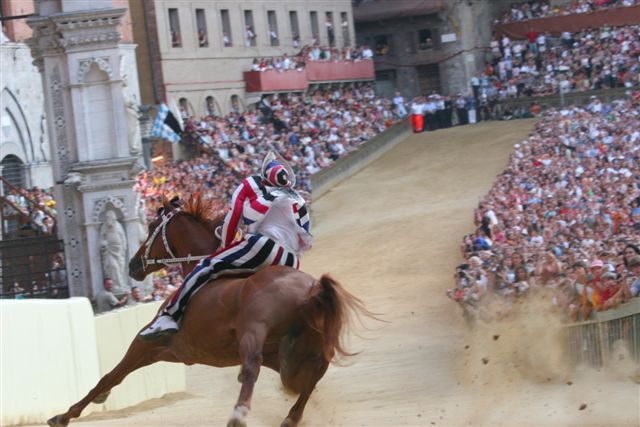
The Palio di Siena: Italy’s Most Thrilling Horse Race
Every summer, the historic Tuscan city of Siena transforms into a passionate stage of medieval pageantry and fierce neighborhood rivalry during the Palio di Siena. This is a centuries-old horse race that captures the heart of Italians and fascinates visitors from around the world. The race is held twice each year—on July 2 (Palio di Provenzano) and August 16 (Palio dell’Assunta). But the Palio is not just a race, but a deeply rooted cultural event that unites tradition, religion, pride, and spectacle.
Origins and History of Italy’s Palio di Siena
The Palio has its roots in the Middle Ages, when Siena—like many Italian cities—was divided into rival neighborhoods known as contrade. While locals had been holding horse races in various forms since the 13th century, the Palio in its current form began in the 1600s. The event was originally organized to honor the Virgin Mary, and this religious devotion still plays a central role today. Each contrada has its own church, colors, flag, and animal symbol, and the competition between them is as much spiritual as it is competitive.
The word palio comes from the Latin pallium, meaning a cloth or banner. In Siena, the winning jockey brings home a hand-painted silk banner known as il drappellone. Typically il drappellone depicting the Virgin Mary and scenes from Sienese life.
Modern Celebrations of Italy’s Palio di Siena
Today, Palio celebrations are still vibrant, especially in the 17 contrade that make up the heart of Siena. Each year, 10 of the 17 are selected by lottery to race in Piazza del Campo, the shell-shaped central square that becomes a dirt racetrack surrounded by thousands of cheering spectators.
The race itself is intense and brief; there are only three laps around the square, lasting about 90 seconds. But the buildup spans days. The tratta (horse selection), prove (trial runs), and benedizione del cavallo (blessing of the horse) are all part of the ritual. On race day, the entire city is caught up in la sfilata storica, the historic parade where participants wear elaborate medieval costumes and carry flags and drums. You’ll hear the rhythmic beat of tamburi and the cry of Viva la contrada! echoing through the narrow cobblestone streets.
Customs, Food, and Festivities of Italy’s Palio di Siena
Each contrada holds feasts and gatherings before and after the race, known as cene di contrada. These community dinners feature long tables of neighbors enjoying traditional Tuscan dishes. These may include pici al ragù (thick hand-rolled pasta with meat sauce), crostini toscani (chicken liver pâté on toasted bread), and cantucci con vin santo (almond cookies dipped in sweet wine).
The night before the race, there is often a solemn yet celebratory dinner to honor il fantino (the jockey). Toasts, songs, and even strategy discussions fill the evening. The morning of the race, many Sienese greet one another with Buon Palio! a heartfelt wish that their contrada may be victorious.
Cultural Significance Today
For Sienese citizens, the Palio is more than a tourist attraction or a sporting event—it’s identity. Being born into a contrada is like being born into a family, and allegiance is lifelong. Children grow up learning the songs, the history, and the rivalries. Even emigrants return home for the Palio, treating it as a kind of spiritual reunion.
The Palio may seem wild or chaotic to outsiders, especially with its lack of modern safety standards and the possibility of riderless horses (cavalli scossi) winning the race. But it continues because it represents something timeless: community, tradition, pride, and faith. Whether you’re drawn by the thrill of the race, the medieval pomp, or the sense of belonging, Italy’s Palio di Siena is an unforgettable celebration of Italian heritage. So next summer, raise a glass of chianti, shout of Italy’s Palio di Siena and immerse yourself in one of Italy’s most passionate traditions.
Get on the road to speaking Italian with the Language Garage!
We hope you’ve enjoyed learning about Italy’s Palio di Siena. If you’d like to learn more:
- Follow us on Facebook, LinkedIn, BlueSky, Twitter, Threads, Mastodon, Instagram, or Pinterest. We publish lots of Italian vocabulary, grammar, and culture notes, so it’s a great way to pick up some new vocabulary and practice.
- Check out our other posts on Italian language, culture, and more.
- Enroll in affordable, flexible, and personalized private online Italian lessons or sign up for a small group online Italian class.
- Create a free Language Garage account to access tons of Italian vocabulary, grammar, and culture.
- Learn basic Italian with our self-study online Italian course.
Image Source Wikimedia Commons

.jpg)
