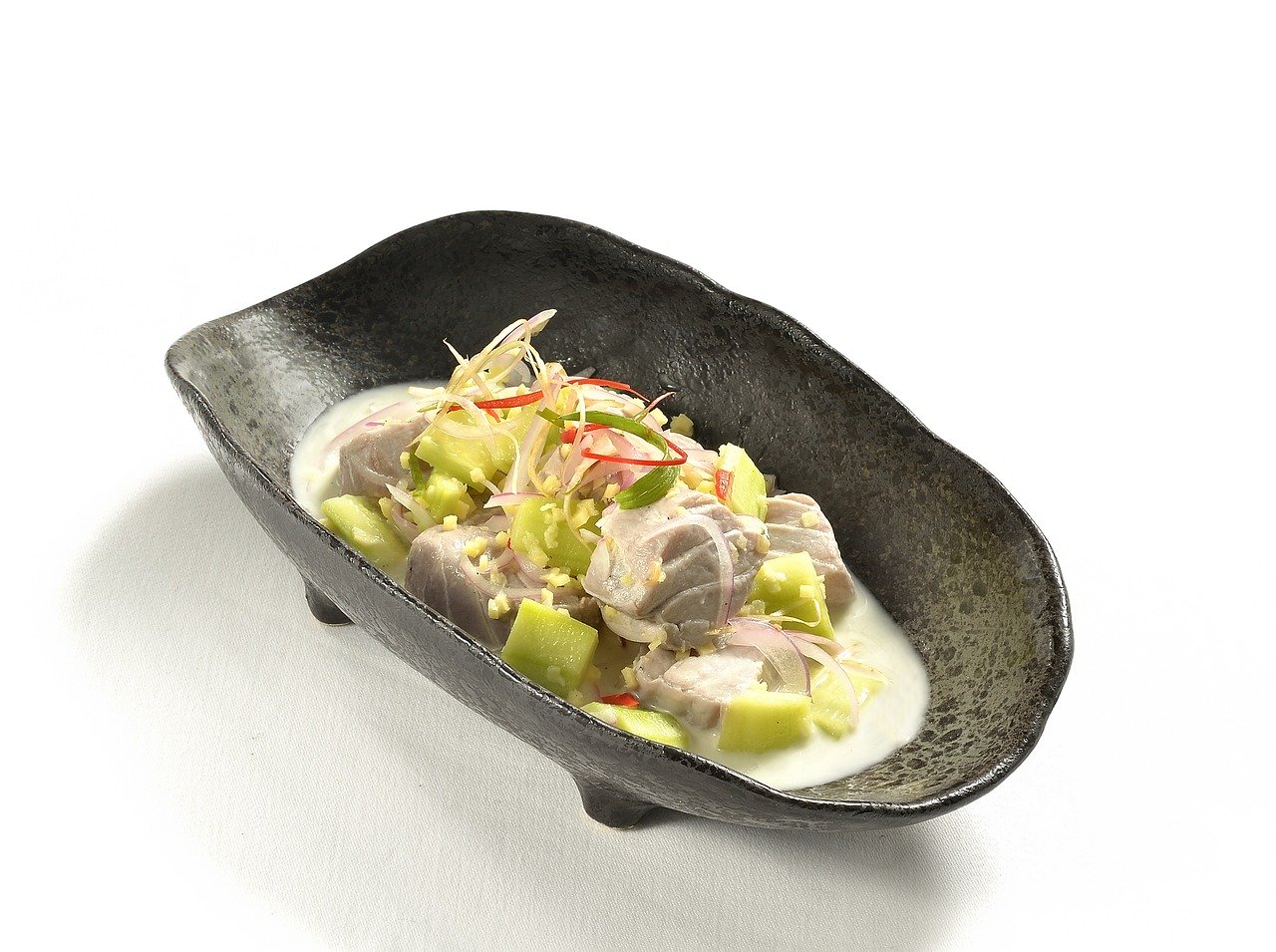
¡Está delicioso! It’s delicious! Spanish Restaurant Vocabulary
In this post we’ll learn some Spanish restaurant vocabulary. First, we’ll look at vocabulary and expressions that you can use when you arrive at a restaurant. Then we’ll turn to vocabulary related to ordering food. Next we’ll turn to special diets in case you need that vocabulary. After that we’ll look at vocabulary related to spice levels, which may or may not come in handy depending on what sort of food you like to eat. Finally, we’ll close with expressions that you can use if someone asks how your food is, or if there’s any problem with your order.
En un restaurante. At a restaurant.
First, let’s look at some Spanish restaurant vocabulary that you can use when you arrive at a restaurant.
- Una mesa para uno/dos/tres/cuatro/cinco, por favor.
A table for one/two/three/four/five, please. - ¿Tiene una reserva/reservación?
Do you have a reservation? - Tengo una reserva/reservación. Tenemos una reserva/reservación.
I have a reservation. We have a reservation. - No tengo una reserva/reservación. No tenemos una reserva/reservación.
I don’t have a reservation. We don’t have a reservation. - ¿Me puede traer el menú?
Do you have a menu? - ¿Tienen algún menú en inglés?
Do you have a menu in English? - ¿Tienen una carta de vinos?
Do you have a wine list?

Ordering Food
Now let’s turn to some vocabulary and expressions related to ordering food. For Spanish vocabulary related to the food itself, check out this post.
- ¿Están listos/listas para pedir?
Are you ready to order? - Estoy listo/lista para pedir. Estamos listos/listas para pedir.
I’m ready to order. We’re ready to order. - No estoy listo/lista para pedir. No estamos listos/listas para pedir.
I’m not ready to order. We’re not ready to order. - Un minuto, por favor.
A few more minutes, please. - ¿Qué recomienda?
What do you recommend? - ¿Me puede traer una servilleta/un tenedor/un cuchillo/una cuchara/un palillo?
Could I have a napkin/fork/knife/spoon/chopsticks? - ¿Me puede traer un vaso de agua?
Could I have a glass of water? - La cuenta, por favor.
Check, please. - ¿Dónde pago?
Where do I pay?
Soy vegetariano/vegetariana. I’m vegetarian.
Now let’s turn to special diets. If you’re on any kind of restricted diet, you may need to know these helpful expressions before you order.
- Estoy a dieta.
I’m on a diet. - Soy vegetariano/vegetariana. No como carne ni pescado.
I’m vegetarian. I don’t eat meat or fish. - Soy vegano/vegana. No consumo productos animales.
I’m vegan. I don’t eat any animal products. - No como gluten.
I don’t eat gluten. - Soy alérgico/alérgica al maní.
I’m allergic to peanuts. - Soy alérgico/alérgica a los lácteos.
I’m allergic to dairy products. - Soy alérgico/alérgica a las nueces.
I’m allergic to tree nuts. - Soy alérgico/alérgica a los mariscos.
I’m allergic to shellfish. - No tomo licor.
I don’t drink alcohol. - No consumo cafeína.
I don’t drink caffeine. - ¿Esa comida es kosher?
Is this food kosher? - ¿Esa comida es halal?
Is this food halal?
No muy picante. Not too spicy!
Depending on what kind of food you’re going to eat, spice may be something you need to talk about. People can tolerate different levels of heat in their food, so you may want to say:
- ¿Esto está picante?
Is this spicy? - Me gusta la comida picante.
I like spicy food. - No me gusta la comida picante.
I don’t like spicy food. - Muy picante, por favor.
Very spicy, please. - No tan picante, por favor.
Medium spicy, please. - Sin picante, por favor.
Not spicy, please. - Está demasiado picante.
It’s too spicy.
¿Cómo está tu comida? How’s your food?
Finally, let’s wrap up our discussion of Spanish restaurant vocabulary with some expressions you can use to talk about your food. The four basic tastes are salado/salada (salty), dulce (sweet), amargo/amarga (bitter), agrio/agria (sour). But if someone asks how your food is, you’ll probably want know a bit more than that.
- Está delicioso/deliciosa.
It’s delicious. - Está buenísimo/buenísima.
It’s great. - La comida está excelente.
This food is excellent. - Está demasiado caliente.
It’s too hot. - Está demasiado frío/fría.
It’s too cold. - Está demasiado dulce.
It’s too sweet. - Está demasiado salado/salada.
It’s too salty. - No sabe a nada.
It’s tasteless. - Está soso.
It’s bland. - Está demasiado cocido.
It’s overcooked. - Está crudo.
It’s undercooked. - Está grasoso/grasosa.
It’s oily/greasy.
Of course, you may prefer to stay in and cook. If so, check out this post. ¡Buen provecho! Enjoy your meal!

Get on the road to speaking Spanish with the Language Garage!
We hope you’ve enjoyed learning some Spanish restaurant vocabulary. If you’d like to learn more:
- Create a free Language Garage account to access tons of Spanish vocabulary, grammar, and culture.
- Follow us on Facebook, LinkedIn, BlueSky, Twitter, Threads, Mastodon, Instagram, or Pinterest. We publish lots of Spanish vocabulary, grammar, and culture notes, so it’s a great way to pick up some new vocabulary and practice.
- Check out our other posts on Spanish language, culture, and more.
- Enroll in affordable, flexible, and personalized private online Spanish lessons or sign up for a small group online Spanish class.
Image by Jonathan Valencia from Pixabay.