Ulimwengu wa Asili: Swahili Nature Vocabulary
In this post we’ll learn some Swahili nature vocabulary. First, we’ll start with vocabulary for plants and things you’ll see in a park. Then we’ll move on to more general vocabulary for plants and trees. Next we’ll turn to vocabulary related to hills, rivers, and valleys. After that we’ll turn to mountains and forests. Finally, we’ll cover vocabulary related to geographic terms.
Maua, Miti, Nyasi, na Hewa Safi: Flowers, Trees, Grass, and Fresh Air
Let’s start with some basics of nature that you can find around you even if most of the nature you see is in a park: mti (a tree), ua (a flower), bustani (a garden, park), nyasi (grass), mmea (a plant), ziwa (a lake), bwawa (a pond), njia (a path, road), msitu (woods, forest). You’re probably not going to see much wildlife in a park, but if you’d like to know how to talk about the animals you do see, check out this post.
- Kuna miti mingi kwenye bustani.
There are lots of trees in the park. - Tazama ua hilo zuri.
Look at that beautiful flower. - Hebu tuketi kwenye nyasi.
Let’s sit in the grass. - Hebu tuketi kwenye benchi karibu na bustani.
Let’s sit on the bench next to the garden. - Kuna njia inayopita msituni.
There’s a path through the woods. - Hebu tutembee karibu na bwawa.
Let’s walk next to the pond. - Je, kuna samaki katika ziwa hili?
Are there fish in this lake? - Je, ziwa hili lina kina kifupi au kirefu?
Is this lake shallow or deep?

Miti na Mimea: Trees and Plants
No matter where we are, there’s usually some kind of plant life around us, even if it’s in a pot in the corner of your office: mmea wa ndani ya nyumba (houseplant), chungu cha maua (flowerpot), waridi (rose), mwiba (thorn), udongo (soil), jani (leaf), tunda la mwaloni (acorn), shina (stem, trunk), mbegu (seed), kokwa (nut, kernel), kumwagilia mmea maji (to water a plant), kupanda mbegu (to plant a seed), kuchanua; maua huchanua (to bloom; flowers bloom), kukua; mimea hukua (to grow; plants grow).
- Ninahitaji kumwagilia mimea yangu.
I need to water my plants. - Tuna mimea mingi ya ndani ya nyumba.
We have a lot of houseplants. - Chungu hicho cha maua ni kizuri.
That’s a beautiful flowerpot. - Majani ya mmea huo yanabadilika na kuwa ya kahawia.
That plant’s leaves are turning brown. - Matunda ya mwaloni yanaanguka kutoka kwenye mti.
Acorns are falling from the tree. - Mawaridi yana miiba kwenye mashina yao.
Roses have thorns on their stems. - Je, mti huo ni mti wa maple au mwaloni?
Is that tree a maple or an oak? - Miti ya misonobari hubaki na rangi ya kijani wakati wa baridi.
Pine trees stay green in the winter. - Nilipanda mbegu za nyanya kwenye bustani.
I planted tomato seeds in the garden. - Maua huchanua katika majira ya kuchipua.
The flowers bloom in the spring. - Mimea kwenye bustani yako inakua haraka.
The plants in your garden are growing quickly.
Milima, Mito, na Mabonde: Hills, Rivers, and Valleys
Let’s add some more nature vocabulary: kilima (hill), bonde (valley), mto (river), kijito (stream), maporomoko ya maji (waterfall), shamba, uwanja (field), mwamba (rock), jabali (large rock, boulder), kinamasi (swamp).
- Nyumba yetu iko kwenye kilima.
Our house is on a hill. - Tunaishi karibu na mto.
We live next to a river. - Maji ya mto yanapita kwa kasi hapa.
The river runs quickly here. - Kuna maporomoko mazuri ya maji karibu na hapa.
There’s a beautiful waterfall nearby. - Kuna mashamba mengi katika bonde.
There are a lot of farms in the valley. - Kuna kijito kidogo msituni karibu na nyumba yetu.
There is a little stream in the woods near our house. - Tulitembea kuvuka uwanja.
We walked across the field. - Kuna maua mazuri ya mwituni kwenye uwanja.
There are beautiful wildflowers in the field. - Kuna mawe mengi na majabali kwenye mteremko wa mlima.
There are a lot of rocks and boulders on the hillside. - Barabara hii inapita kwenye kinamasi.
This road goes through a swamp.
Milima na Misitu: Mountains and Forests
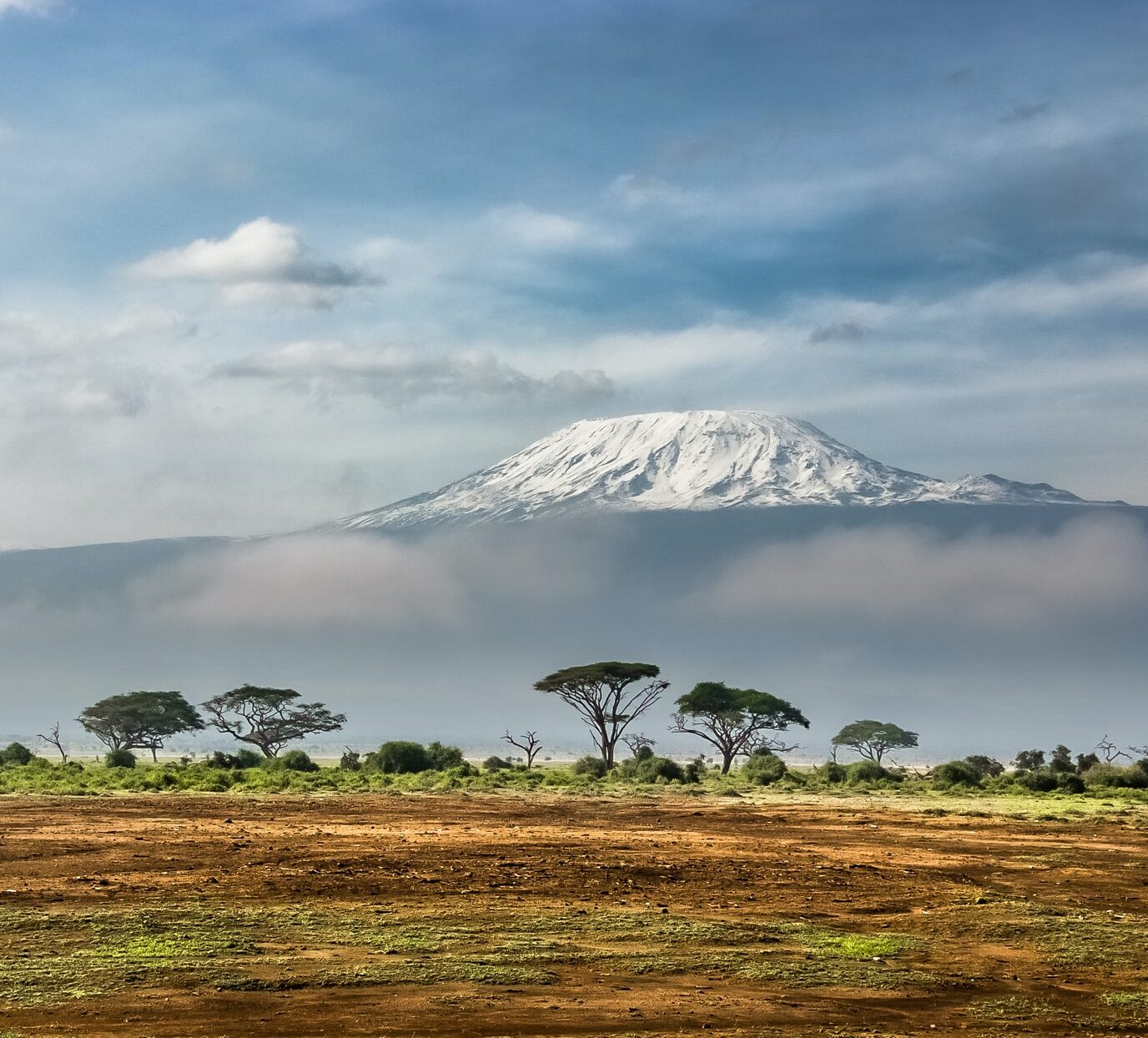
If you ever get to the mountains, you may need to say: mlima (a mountain); safu ya milima (a mountain range); kilele cha mlima (the summit of the mountain); kutembea milimani (to hike in the mountains); kupanda mlima (to climb a mountain); kilele (a peak); jabali lenye mteremko mkali (a cliff); msitu (a forest); kupiga kambi msituni (to camp in the forest); miti ya misonobari (pine trees); miti ya maple (maple trees); miti ya mwaloni (oak trees); wanyama pori (wild animals).
- Kuna safu mbili za milima katika nchi hii.
There are two mountain ranges in this country. - Tunaweza kuona milima mizuri kupitia dirisha letu.
We can see beautiful mountains from our window. - Je, kilele cha mlima huu kiko kwenye urefu wa mita ngapi?
How high is the summit of this mountain? - Vilele vya milima vimefunikwa na theluji.
The mountain peaks are covered in snow. - Majabali hayo yana urefu gani?
How high are those cliffs? - Ninapenda kupiga kambi msituni.
I like to camp in the forest. - Kuna miti ya misonobari, maple, na mwaloni katika msitu huu.
There are pine trees, maple trees, and oak trees in this forest. - Je, kuna wanyama pori katika msitu huu?
Are there wild animals in this forest?
Dunia: The World
Let’s finish with some geographical terms that you can use to talk about the natural world: bara (continent), bahari (ocean, sea), baharini (in the sea/ocean), ghuba (bay), pwani (coast), kisiwa (island), jangwa (desert), msitu wa kitropiki (tropical forest, jungle), mto wa barafu (glacier), siwa barafu (iceberg), Ncha ya Kaskazini / Ncha ya Kusini (North/South Pole), kaskazini / kusini / mashariki / magharibi (north/south/east/west).
- Kuna mabara mangapi?
How many continents are there? - Bahari ni pana na ina kina kirefu.
The ocean is wide and deep. - Ninapenda kuogelea baharini.
I love swimming in the sea. - Mto unamwaga maji yake kwenye ghuba kubwa.
The river empties into a big bay. - Tuliendesha gari kando ya pwani.
We drove along the coast. - Inabidi uchukue feri ili kufika kisiwani.
You have to take a ferry to get to the island. - Jangwani kuna joto na ukavu.
The desert is hot and dry. - Mimea na wanyama wa aina nyingi huishi katika misitu ya kitropiki.
Many different plants and animals live in the jungle. - Mito ya barafu inazidi kupungua ukubwa.
The glaciers are getting smaller and smaller. - Kuna siwa barafu baharini karibu na Ncha ya Kaskazini au Ncha ya Kusini.
There are icebergs in the ocean near the North or South Pole. - Jua huchomoza mashariki na kuzama magharibi.
The sun rises in the east and sets in the west.

Get on the road to speaking Swahili with the Language Garage!
We hope you’ve enjoyed learning some Swahili nature vocabulary. If you’d like to learn more:
- Follow us on Facebook, LinkedIn, BlueSky, Twitter, Threads, Mastodon, Instagram, or Pinterest. We publish lots of Swahili vocabulary, grammar, and culture notes, so it’s a great way to pick up some new vocabulary and practice.
- Check out our other posts on Swahili language, culture, and more.
- Enroll in affordable, flexible, and personalized private online Swahili lessons or sign up for a small group online Swahili class.
- Create a free Language Garage account to access tons of Swahili vocabulary, grammar, and culture.
Photo by Sergey Pesterev on Unsplash