Afya: Talking about Health and Fitness in Swahili
In this post we’re going to learn some vocabulary and expressions that you can use to talk about health and fitness in Swahili. First, we’ll start with some general vocabulary and expressions related to health and fitness overall. After that we’ll talk about diet and exercise. Finally, we’ll wrap up with some vocabulary and expressions related to health checkups.
Health and Fitness in Swahili: General Expressions
First, let’s start with some general vocabulary and expressions that you can use to talk about health and fitness in Swahili: kuwa na afya nzuri to be healthy, kuwa na afya mbaya to be in poor health, kuwa fitito be in shape, kutokuwa fitito be out of shape, kuishi maisha yenye afya to have a healthy lifestyle, kuishi maisha yasiyo na afya to have an unhealthy lifestyle, kufanya mazoezi to exercise, kwenda kwenye ukumbi wa mazoezi to go to the gym.
Example Sentences
- Afya ni muhimu.
Health is important. - Niko fiti. Siko fiti.
I’m in shape. I’m out of shape. - Unaishi maisha yenye shughuli nyingi za kimwili.
You have a physically active lifestyle. - Unaishi maisha ya kukaa sana bila kufanya mazoezi.
You have a sedentary lifestyle. - Ana lishe bora. Ana lishe isiyofaa kwa afya.
He has a healthy diet. He has an unhealthy diet. - Anafanya mazoezi mara kwa mara. Hafanyi mazoezi.
She exercises regularly. She doesn’t exercise. - Anafanya mazoezi kwenye ukumbi wa mazoezi siku tano kwa wiki.
She works out at the gym five days a week. - Tunakula vyakula vyenye afya tu.
We only eat healthy food. - Wanakula vyakula visivyofaa kabisa kwa afya.
They eat very unhealthy food. - Unahitaji kulala zaidi.
You need to get more sleep.
Usage Note
Swahili uses afya for health and mazoezi for exercise. The expression kufanya mazoezi literally means to do exercises and is the most useful general expression for working out.
Utimamu wa mwili is a relatively formal expression for physical fitness, while kuwa fiti, using the borrowed word fiti, is common in informal speech, especially in urban East African Swahili.
Talking about Diet in Swahili
Next, let’s turn to diet. You can’t talk about health and fitness in Swahili without talking about diet. First, here is some vocabulary: lishe bora / lishe yenye afya a healthy diet, lishe duni / lishe isiyofaa kwa afya a poor or unhealthy diet, kalori calories, kuwa na uzito kupita kiasi to be overweight, kuongeza uzito / kuongezeka kwa uzito to gain weight / an increase in weight, kupunguza uzito to lose weight, kufuata mpango maalumu wa lishe to follow a particular diet, mafuta fats, wanga carbohydrates, protini protein.
Example Sentences
- Ninahitaji kupunguza uzito. Nina uzito kupita kiasi.
I need to lose weight. I’m overweight. - Unahitaji kuongeza uzito kidogo, umekonda sana!
You need to put on some weight, you’re too thin! - Unahitaji kufuata lishe yenye uwiano mzuri wa virutubisho.
You need to follow a balanced diet. - Mazoezi husaidia kuchoma kalori nyingi.
Exercise helps burn a lot of calories. - Sukari, tambi na mkate ni vyakula vyenye wanga mwingi.
Sugar, pasta, and bread are foods containing a lot of carbohydrates. - Nyama, mayai, jibini na maharagwe vina protini.
Meat, eggs, cheese, and beans contain protein. - Nilianza kufuata lishe yenye wanga kidogo wiki mbili zilizopita.
I started a low-carb diet two weeks ago. - Tunafuata lishe yenye mafuta kidogo.
We are on a low-fat diet. - Mboga zina vitamini, madini na nyuzinyuzi kwa wingi.
Vegetables are rich in vitamins, minerals, and fiber. - Chakula cha haraka kinaweza kuwa na madhara kwa afya.
Fast food can be harmful to your health. - Tunapika nyumbani mara nyingi kwa sababu chakula cha nyumbani kinafaa zaidi kwa afya.
We cook at home a lot because home-cooked food is healthier. - Unahesabu kalori unazopata kutoka kwenye chakula?
Do you count the calories you consume? - Ninatumia app kufuatilia kalori ninazokula na mazoezi ninayofanya.
I use an app to track the calories I eat and the exercise I do.
Vocabulary Note
Lishe refers to nutrition or diet, while mlo means a meal. Lishe bora is a very common expression meaning good nutrition / a healthy diet. Chakula means food, and vyakula is its plural.
The expression kupunguza uzito means to reduce weight, while kuongeza uzito means to increase weight. Kunenepa means to become fat / gain weight, and kukonda means to become thin / lose weight. The latter two can describe changes in someone’s body without necessarily implying a deliberate diet.
In nutritional vocabulary, wanga means carbohydrates, mafuta means fats or oils, and protini means protein. Nyuzinyuzi refers to dietary fiber.
Exercise
Now let’s continue our discussion of vocabulary related to health and fitness in Swahili by focusing on exercise. Let’s start with some activity verbs.
- kufanya mazoezi
to exercise - kucheza michezo / kushiriki katika michezo
to play sports / participate in sports - kufanya sanaa za mapigano
to practice martial arts - kucheza mpira wa miguu / mpira wa kikapu / raga / hoki
to play soccer/basketball/rugby/hockey - kukimbia
to run - kutembea
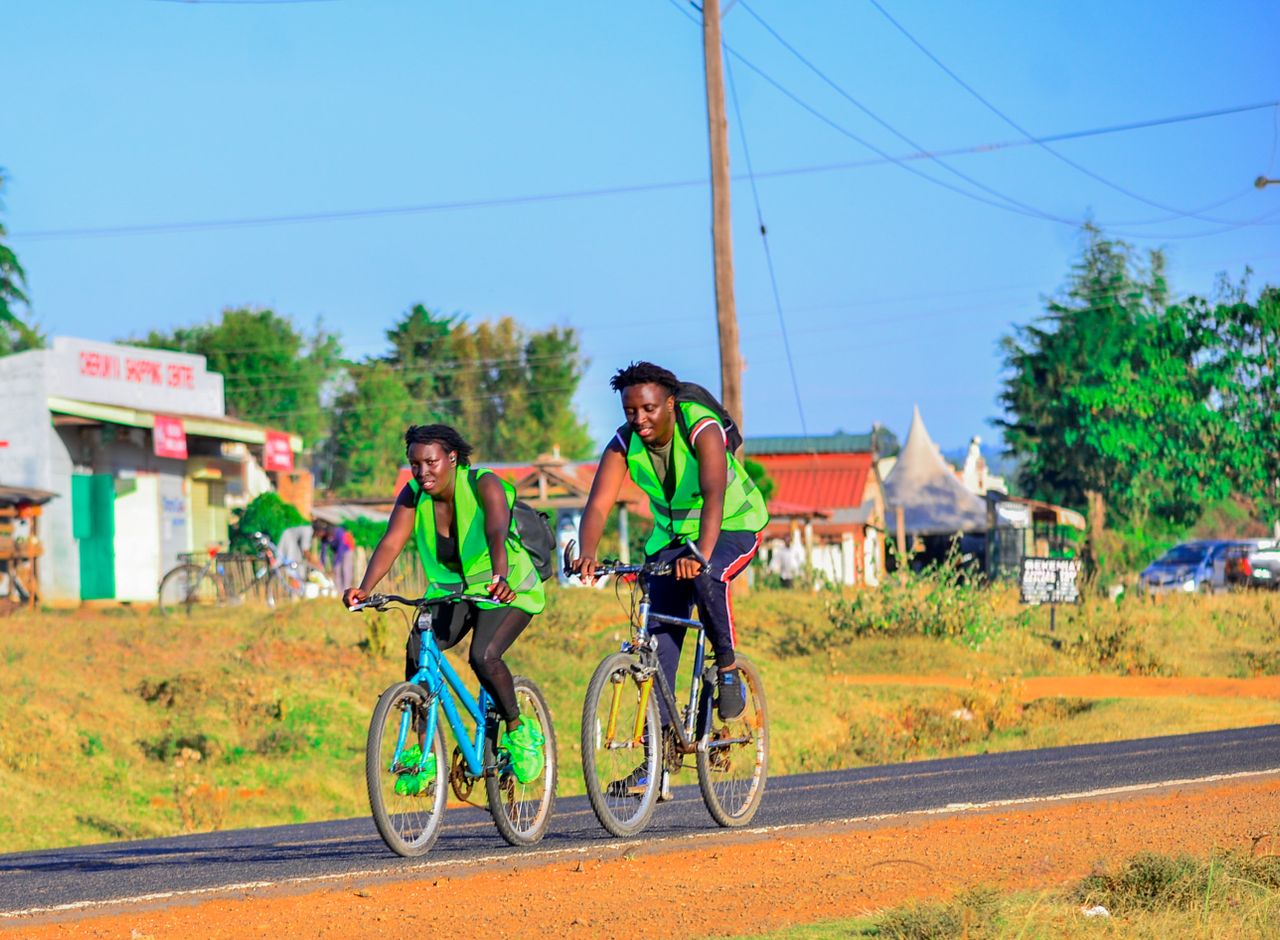
to walk - kuendesha baiskeli
to ride a bike - kutembea milimani / kufanya matembezi marefu
to hike - kuogelea
to swim - kwenda kwenye ukumbi wa mazoezi
to go to the gym - kunyanyua vyuma / kufanya mazoezi ya nguvu
to lift weights / do strength training - kufanya mazoezi ya aerobiki
to do cardio / aerobic exercise - kufanya yoga
to do yoga - kufanya tai chi
to do tai chi - kunyoosha misuli / kufanya mazoezi ya kunyoosha misuli
to stretch / to do stretching exercises
Vocabulary
If you do any of those activities, you may need to know how to say: viatu vya michezo / viatu vya kukimbia sneakers/running shoes, viatu vya kutembea milimani hiking shoes, kofia ngumu ya baiskeli bicycle helmet, vazi la kuogelea swimsuit, vyuma vya kunyanyua uzito weightlifting bars / weights, dambeli dumbbells, benchi la kunyanyulia vyuma weight bench, mashine ya kukimbia treadmill, mashine ya eliptiki elliptical machine, baiskeli ya mazoezi stationary bike, mkeka wa yoga yoga mat, chumba cha kubadilishia nguo locker room.
Example Sentences
- Unacheza michezo yoyote?
Do you play sports? - Anacheza mpira wa miguu / mpira wa kikapu / raga / hoki.
She plays soccer/basketball/rugby/hockey. - Ninahudhuria madarasa ya sanaa za mapigano / madarasa ya karate.
I take martial arts / karate classes. - Ninakimbia mara nne au tano kwa wiki.
I run four or five times a week. - Anaendesha baiskeli kila jioni baada ya kazi.
He rides his bike every evening after work. - Tunafanya matembezi marefu milimani mara kadhaa kwa mwaka.
We go hiking in the mountains several times a year. - Unaenda kwenye ukumbi gani wa mazoezi?
Which gym do you go to? - Ninataka kujiandikisha kuwa mwanachama wa ukumbi wa mazoezi.
I want to sign up for a gym membership. - Watu wengi hufanya mazoezi ya aerobiki kwenye ukumbi wa mazoezi.
Many people do cardio at the gym. - Unatumia mashine ya eliptiki au unakimbia kwenye mashine ya kukimbia?
Do you use the elliptical machine, or do you run on the treadmill? - Ninafanya mazoezi ya push-up / mazoezi ya tumbo.
I’m doing push-ups / abdominal exercises. - Ninafanya mazoezi ya kusukuma vyuma nikiwa nimelala kwenye benchi mara mbili kwa wiki.
I do bench presses twice a week. - Siwezi kunyanyua vyuma kwa sababu nilijeruhi mgongo wangu.
I can’t lift weights because I injured my back. - Ukumbi wangu wa mazoezi una madarasa ya yoga.
My gym offers yoga classes. - Baadhi ya watu hufanya tai chi kwenye bustani kila asubuhi.
Some people do tai chi in the park every morning. - Ninanyoosha misuli kabla ya kufanya mazoezi.
I stretch before I work out.
Usage Note
Kucheza means to play and is used for many sports, especially ball games: kucheza mpira wa miguu to play soccer, kucheza mpira wa kikapu to play basketball. The noun mpira means ball, while michezo means sports or games.
Kutembea means to walk, while kukimbia means to run. For hiking, Swahili often uses descriptive expressions such as kutembea milimani to walk in the mountains or kufanya matembezi marefu to take long walks / go hiking.
Some specialized fitness equipment does not have a single universally established Swahili name. English borrowings and descriptive phrases are common, particularly in gyms. For example, treadmill, dumbbell, push-up, and bench press may be used directly in informal speech, while descriptive Swahili equivalents or descriptive equivalents are useful for explaining the activities.
The expression mazoezi ya aerobiki refers to aerobic exercise or cardio. More descriptive expressions such as mazoezi ya kuimarisha moyo na mapafu exercises to strengthen the heart and lungs may also be used.
Health Checkups
Finally, you can’t talk about health and fitness in Swahili without talking about regular health checkups. Let’s start with some vocabulary: daktari doctor; muuguzi nurse; kliniki / kituo cha afya clinic / health center; kuweka miadi ya kumwona daktari to make a doctor’s appointment; kufanyiwa uchunguzi wa afya to have a physical examination / health checkup; vipimo vya damu blood tests; shinikizo la damu blood pressure.
Example Sentences
- Nitafanyiwa uchunguzi wangu wa afya wa kila mwaka wiki ijayo.
I have my yearly physical next week. - Daktari ananipima shinikizo la damu.
The doctor takes my blood pressure. - Daktari anasikiliza mapafu yangu kwa kifaa cha kusikilizia moyo na mapafu.
The doctor listens to my lungs with a stethoscope. - Daktari ameagiza nifanyiwe vipimo vya damu.
The doctor ordered blood tests for me. - Nina kiwango cha juu cha kolesteroli.
I have high cholesterol. - Ana shinikizo la juu / la chini la damu.
He has high/low blood pressure. - Unatumia dawa gani?
What medications do you take? - Ninatumia dawa za kupunguza kolesteroli.
I take medication to lower my cholesterol. - Anatumia dawa za kupunguza shinikizo la damu.
She takes medication for high blood pressure. - Watu wengi hutumia dawa za kutibu unyogovu.
Many people take antidepressants.
Usage Notes
Kituo cha afya literally means health center, while kliniki is a borrowed word meaning clinic. Hospitali means hospital.
The verb kupima means to measure / test / examine. It is especially useful in medical contexts: kupima shinikizo la damu to measure blood pressure, kupima sukari ya damu to test blood sugar, and kupima uzito to measure weight. The passive form kupimwa means to be examined or tested.
Notice the construction Nitafanyiwa uchunguzi wa afya, literally I will have a health examination done for me. The verb kufanyiwa is an applicative passive form related to kufanya to do / make. It is useful when describing medical procedures performed on someone.
Finally, dawa means medicine or medication, and kutumia dawa means to take or use medication. Kumeza dawa means to swallow medicine, particularly pills or tablets.
In discussions of mental health, unyogovu is a term for depression, while msongo wa mawazo refers to psychological stress. The English borrowing antidepressants is also used in some medical contexts, alongside descriptive Swahili expressions such as dawa za kutibu unyogovu medications for treating depression.
Get on the road to speaking Swahili with the Language Garage!
We hope you’ve enjoyed learning how to talk about health and fitness in Swahili. If you’d like to learn more:
- Follow us on Facebook, LinkedIn, BlueSky, Twitter, Threads, Mastodon, Instagram, or Pinterest. We publish lots of Swahili vocabulary, grammar, and culture notes, so it’s a great way to pick up some new vocabulary and practice.
- Check out our other posts on Swahili language, culture, and more.
- Enroll in affordable, flexible, and personalized private online Swahili lessons or sign up for a small group online Swahili class.
- Create a free Language Garage account to access tons of Swahili vocabulary, grammar, and culture.
Photo by Kingpin photography on Pexels