学校で gakkō de (at school): Japanese School Vocabulary
In this post, we’ll learn some Japanese school vocabulary. We’ll start with some general vocabulary related to schools. Next, we’ll move on to Japanese school vocabulary for the classroom and for homework and tests. Then we’ll learn vocabulary to talk about school subjects. Finally, we’ll look at vocabulary related to college and university.
どこの学校に行っていますか。 Doko no gakkou ni itte imasu ka. Where do you go to school?
First, lets start with some basic vocabulary.
- 学校
gakkou
school - 小学校、高校、大学
shougakkou, koukou, daigaku
primary school, high school, university - 生徒、先生、教授
seito, sensei, kyouju
student, teacher, professor
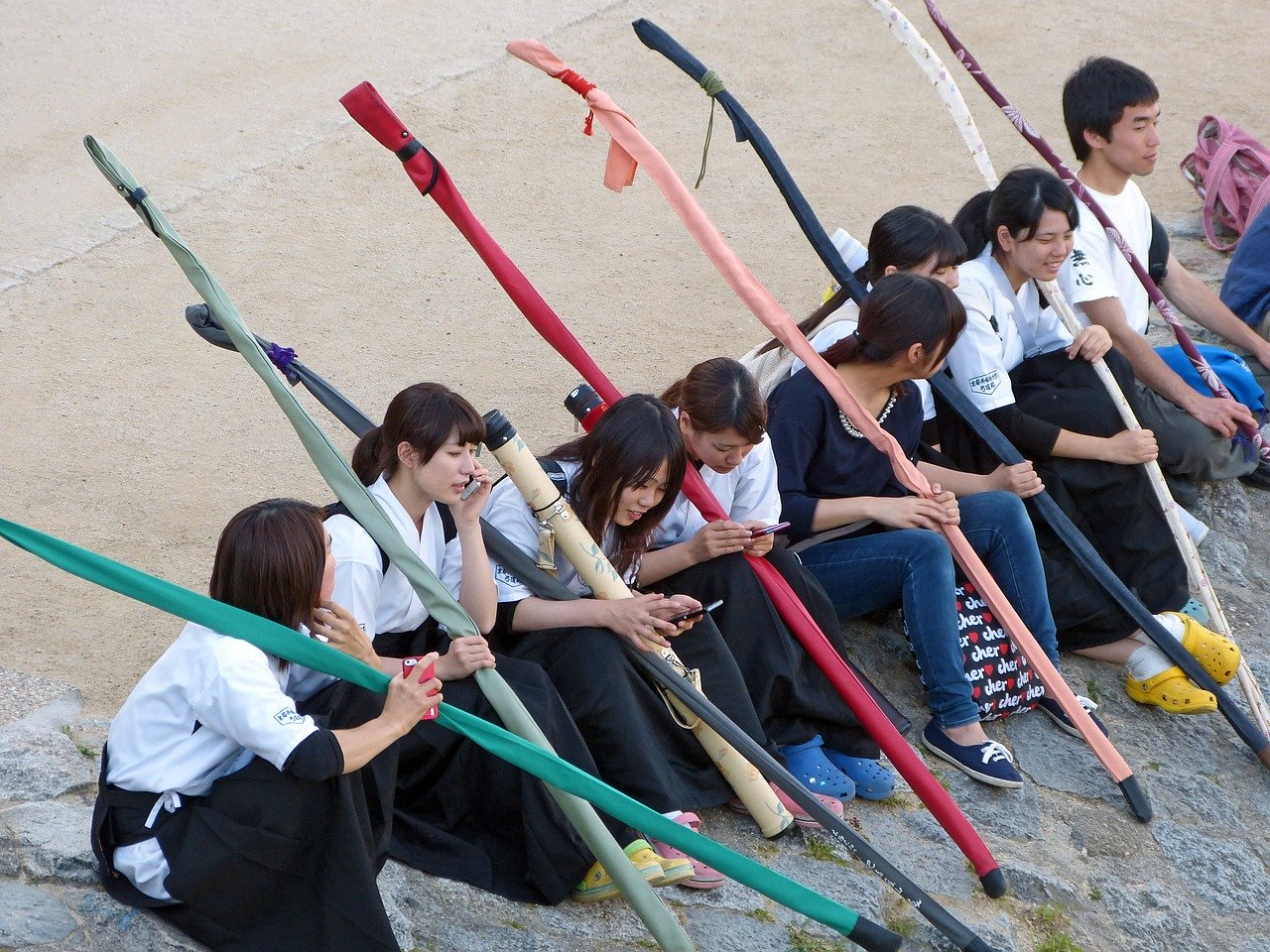
- 高校生です。
Koukousei desu.
She’s a high school student. - 小学校に行っています。
Shougakkou ni itte imasu.
He goes to primary school. - 何年生ですか。
Nan’nensei desu ka.
What grade is he in/she in? - 大学で何を勉強していますか。
Daigaku de nani o benkyoushite imasu ka.
What are you studying at university?
教室で Kyoushitsu de In the classroom
Second, here’s some vocabulary to help you talk about the classroom.
- 教室、生徒の机、本棚、ノート
kyoushitsu, seito no tsukue, hondana, nooto
classroom, student’s desk, bookshelf, notebook - 先生の机、黒板、ホワイトボード、地図、地球儀
sensei no tsukue, kokuban, howaito boodo, chizu, chikyuugi
teacher’s desk, blackboard, whiteboard, map, globe - 教科書, ノート、紙、鉛筆、ペン、消しゴム
kyoukasho, nooto, kami, enpitsu, pen, keshigomu
notebook, paper, pencil, pen, eraser - タブレット、画面、計算機
taburetto, gamen, keisanki
tablet, screen, calculator - 勉強する, 学ぶ, 聞く, 試験を受ける, 注意を払う, メモをとる
benkyousuru, manabu, kiku, shiken oukeru, chuui o harau, memo o toru
to study, to learn, to listen, to take a test, to pay attention, to take notes - この教室は {大きい・小さい}です。
Kono kyoushitsu wa {ookii/chiisai} desu.
This classroom is big/small. - 先生はホワイトボードに書きます。
Sensei wa howaito boodo ni kakimasu.
The teacher writes on the whiteboard. - 生徒はノートをとります。
Seito wa nooto o torimasu.
The students take notes. - 生徒は先生の話を聞きます。
Seito wa sensei no hanashi o kikimasu.
The students listen to the teacher. - 生徒は先生に注意を向けます。
Seito wa sensei ni chuui o mukemasu.
The students pay attention to the teacher. - 質問があります。
Shitsumon ga arimasu.
I have a question. - 先生は生徒の質問に答えます。
Sensei wa seito no shitsumon ni kotaemasu.
The teacher answers the students’ questions. - 先生は教えます。生徒は学びます。
Sensei wa oshiemasu. Seito wa manabimasu.
The teacher teaches. The students learn.
宿題 shukudai homework
Third, let’s move on to vocabulary related to homework and tests. If you’re in primary school or high school, you probably have a lot of opportunity to say things like:
- 明日試験があります。
Ashita shiken ga arimasu.
We have a test tomorrow. - 試験を受けます。
Shiken o ukemasu.
I’m taking a test. - 勉強しなければいけません。
Benkyou shinakereba ikemasen.
I have to study. - たくさん宿題があります。
Takusan shukudai ga arimasu.
I have a lot of homework. - 新しい単語を覚えなければなりません。
Atarashii tango o oboenakereba narimasen.
I have to memorize new vocabulary. - 毎晩宿題をします。
Maiban shukudai o shimasu.
I do homework every night. - 試験で {いい・悪い} 成績をとりました。
Shiken de {ii/warui} seiseki o torimashita.
I got a good/bad grade on the test. - 授業の {単位が取れました・単位を落としました} 。
Jugyou no {tan’i ga toremashita/tan’i o otoshimashita}.
I passed/failed the class.
科目 kamoku school subjects
Fourth, let’s learn how to say various school subjects in Japanese.
- 人類学
jinruigaku
anthropology - 美術
bijutsu
art - 生物学
seibutsugaku
biology - 化学
kagaku
chemistry - 情報工学
jouhou kougaku
computer science - 経済学
keizaigaku
economics - 工学
kougaku
engineering - 地理学
chirigaku
geography - 歴史
rekishi
history - 言葉
kotoba
languages - 言語学
gengogaku
linguistics - 文学
bungaku
literature - 文学
bungaku
literature - 数学
suugaku
math - 医学
igaku
medicine - 哲学
tetsugaku
philosophy - 物理学
butsurigaku
physics - 政治学
seijigaku
political science - 心理学
shinrigaku
psychology - 科学
kagaku
science - 社会
shakai
social studies - 社会学
shakaigaku
sociology
どの科目が好きですか。Dono kamoku ga suki desu ka. What’s your favorite subject?
Fifth, let’s learn some vocabulary for talking about the subjects you like, and the ones you don’t.
- 歴史が私の好きな科目です。
Rekishi ga watashi no suki na kamoku desu.
History is my favorite subject. - 語学が得意です。
Gogaku ga tokui desu.
I’m good at languages. - 生物学の成績がいいです。
Seibutsugaku no seiseki ga ii desu.
I’m doing well/getting good grades in biology. - 苦手な科目は何ですか。
Nigate na kamoku wa nan desu ka.
What’s your least favorite subject? - 数学が好きじゃありません。
Suugaku ga suki ja arimasen.
I don’t like math. - 科学が苦手です。
Kagaku ga nigate desu.
I’m bad at science. - 化学が分かりません。
Kagaku ga wakarimasen.
I don’t understand chemistry. - 物理学の成績が悪いです。
Butsurigaku no seiseki ga warui desu.
I’m doing poorly/getting bad grades in physics.
大学で daigaku de at university
And finally, let’s learn some Japanese school vocabulary related to university. If you’re a 大学生 daigakusei university student, you’ll probably have a chance to use this vocabulary.
- 講義、ゼミ
kougi, zemi
lecture, seminar - 講堂、レクチャーホール、実験室
koudou, rekuchaa hooru, jikkenshitsu
auditorium, lecture hall, laboratory - 今日授業があります。
Kyou jugyou ga arimasu.
I have class today. - 今日の午後、授業がありません。
Kyou no gogo, jugyou ga arimasen.
I don’t have class this afternoon. - 図書館で勉強します。
Toshokan de benkyou shimasu.
I study in the library. - 研究をしています。
Kenkyuu o shite imasu.
I’m doing research. - レポートを書いています。
Repooto o kaite imasu.
I’m writing a research paper. - 実験をしています。
Jikken o shite imasu.
I’m doing an experiment. - 論文は何についてですか。
Ronbun wa nani ni tsuite desu ka.
What’s your thesis on? - 論文を書いています。
Ronbun o kaite imasu.
I’m writing my thesis. - 寮に住んでいます。
Ryou ni sunde imasu.
I live in a dormitory. - ルームメイトがいます。
Ruumumeito ga imasu.
I have a roommate.

Get on the road to speaking Japanese with the Language Garage!
We hope you’ve enjoyed learning some Japanese school vocabulary. If you’d like to learn more:
- Create a free Language Garage account to access tons of Japanese vocabulary, grammar, and culture.
- Follow us on Facebook, LinkedIn, BlueSky, Twitter, Threads, Mastodon, Instagram, or Pinterest. We publish lots of Japanese vocabulary, grammar, and culture notes, so it’s a great way to pick up some new vocabulary and practice.
- Check out our other posts on Japanese language, culture, and more.
- Enroll in affordable, flexible, and personalized private online Japanese lessons or sign up for a small group online Japanese class.