가을 ga-eul: Korean Autumn Vocabulary
In this post we’re going to learn some Korean autumn vocabulary. First, we’ll start with vocabulary for the beautiful colors of the season. Next, we’ll look at vocabulary related to fall weather and shorter days. After that we’ll talk about fall clothing. Finally, we’ll wrap up our discussion of Korean autumn vocabulary with some expressions to help you capture the calm, quiet mood of the season.
색 saeg Colors
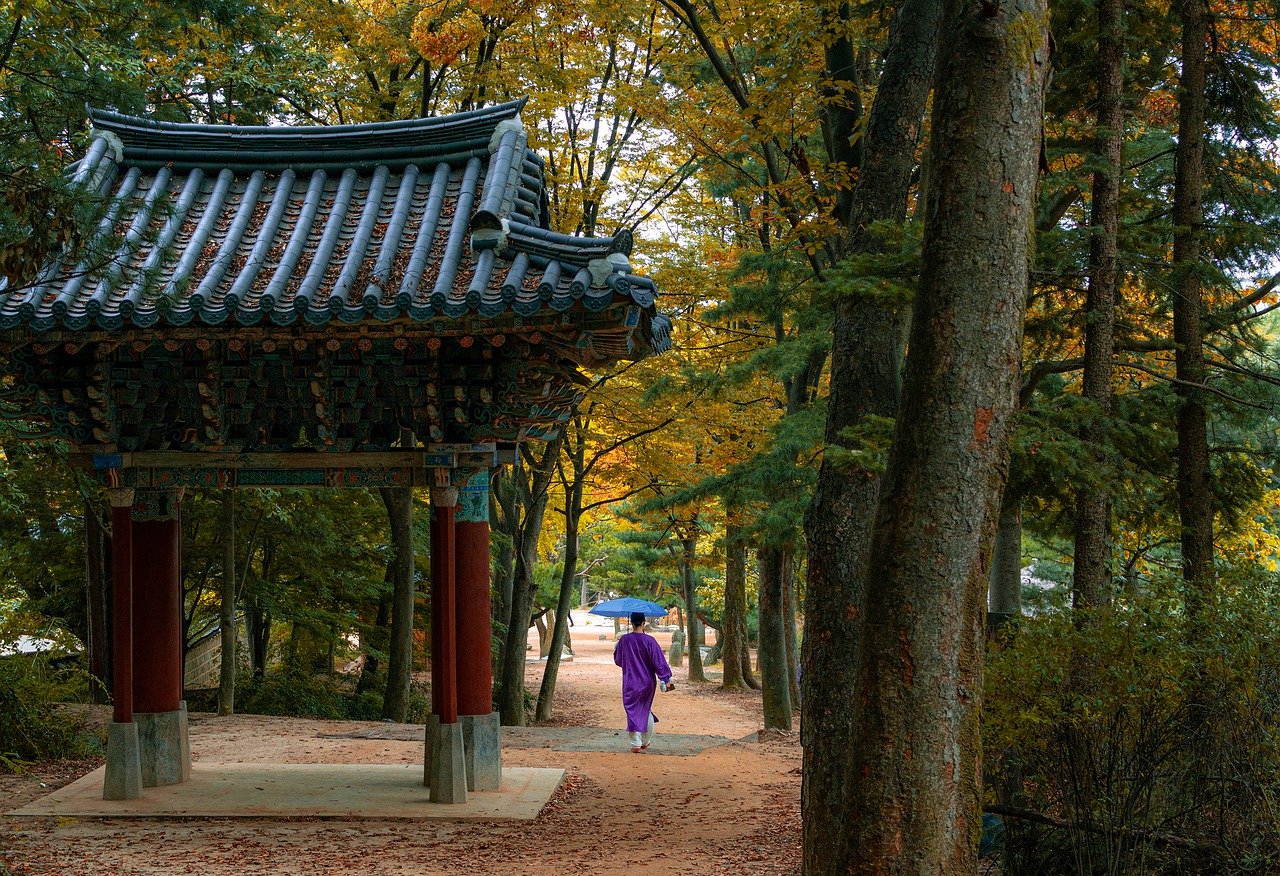
Let’s start with the colors. 나뭇잎 namunip Leaves and 아름다운 색 aleumdaun saeg beautiful colors are probably two of the first things that you think about when you think of fall. 빨간색 나뭇잎 ppalgansaeg namunip red leaves, 주황색 나뭇잎 juhwangsaeg namunip orange leaves, 노란색 나뭇잎 nolansaeg namunip yellow leaves, 금색 나뭇잎 geumsaeg namunip gold leaves are everywhere at first, and then: 갈색 나뭇잎들이 땅에 떨어진다. galsaeg namunipdeul-i ttang-e tteoleojinda. The brown leaves fall to the ground. Here is some leaf-peeping vocabulary in Korean.
- 나뭇잎들의 색이 변하고 있다.
namunipdeul-ui saeg-i byeonhago itda.
The leaves are changing color. - 이맘때 나무들이 아름답다.
imamttae namudeul-i aleumdabda.
The trees are beautiful this time of year. - 산비탈 전체가 금색이다.
sanbital jeonchega geumsaeg ida.
The whole hillside is gold. - 나뭇잎들이 나무에서 떨어지고 있다.
namunipdeul-i namu-eseo tteoleojigo itda.
The leaves are falling off the trees.

날씨가 추워지고 있다. nalsshiga chuwojigo itda. It’s getting colder.
Next, let’s turn to fall weather. 추운 날씨 chuun nalsshi Cool Weather is probably the other thing that you first think of when you think of fall. If you live in a place where the seasons change a lot, you may want to say:
- 날씨가 시원해요.
nalsshi-ga shiwonhaeyo.
The weather is cool. - 비가 오고 흐려요.
biga ogo heulyeoyo..
It’s rainy and cloudy. - 낮은 쌀쌀하고, 밤은 추워요.
naj-eun ssalssalhago, bam-eun chuwoyo.
The days are chilly and the nights are cold. - 나뭇잎이 바람에 날리다.
namusip-i balam-e nallida.
The wind is blowing the leaves. - 하늘이 흐리다.
haneul-i heulida.
The sky is gray.
낮이 짧아지고 있다. naj-i jjalbajigo itda. The days are getting shorter.
Now let’s talk about shorter fall days. With shorter fall days, you may want to say:
- 한국은 서머타임을 시행하지 않아요.
Hangug-eun seomeotaim-eul sihaenghaji anayo.
South Korea doesn’t observe daylight saving time. - 시계를 한 시간 뒤로 돌리는 거 잊지 않았어요?
Sigyereul han sigan dwiro dollineun geo itji anasseoyo?
Did you remember to turn your clock back one hour? - 날이 일찍 어두워 진다.
nal-i iljjig eoduwo jinda.
It gets dark early. - 해가 일찍 진다.
hae-ga iljjig jinda.
The sun sets early. - 햇빛이 덜 든다.
haetbich-i deol deunda.
There’s less sunlight.
가을 옷 ga-eul ot Autumn clothes
Now let’s turn to autumn clothes. All of these fall changes probably mean a change in your wardrobe, too.
- 반바지와 티셔츠는 필요 없어요.
banbajiwa tisyeocheu-neun pilyo eobseoyo.
I don’t need my shorts and tee shirts. - 스웨터를 입어요.
seuweteo-leul ibeoyo.
I’m putting on a sweater. - 재킷을 입어야 해요.
jaekis-eul ibeoya haeyo.
I need to wear a jacket. - 모자와 비옷을 입어야 해요.
mojawa bios-eul ibeoya haeyo.
I need to wear a hat and a raincoat. - 우산이 어디 있어요?
usan-i eodi isseoyo?
Where’s my umbrella? - 침대 위에 담요를 하나 더 깔자.
chimdae wi-e damyo-leul hana deo kkalja.
Let’s put an extra blanket on the bed.
고요하고 조용한 저녁 goyohago joyonghan jeonyeog Calm, Quiet Evenings
Finally, let’s wrap up our Korean autumn vocabulary with some expressions related to the mood of the season. Many people find fall to be the most relaxing season, and other people find it to be a bit sad.
- 오늘 밤 집에 있어요.
oneul bam jib-e isseoyo.
I’m staying in tonight. - 오늘 밤 좋은 책을 읽어요.
oneul bam joheun chaeg-eul ilgeoyo.
I’m reading a good book tonight. - 차 한잔을 마셔요.
cha hanjan-eul masheoyo.
I’m drinking a cup of tea. - 가을에 일찍 자요.
ga-eul-e iljjig jayo.
I go to bed earlier in the fall. - 가을에 슬퍼져요.
ga-eul-e seulpeojyeoyo.
I always get sad in the fall. - 여름의 해와 긴 낮이 그리워요.
yeoleum-e haewa gin naj-i geuliwoyo.
I miss the sun and the long days of summer. - 가을은 나를 우울하게 한다.
ga-eul-eun na-leul uulhage handa.
Fall depresses me.
Whether you say 가을을 좋아해요. 내가 제일 좋아하는 계절이에요! ga-eul-eul joahaeyo. naega jeil joahaneun gyejeol-ieyo! I love fall, it’s my favorite season! or 가을을 안좋아해요. 가을은 어둡고, 춥고, 우울해요. ga-eul-eul anjoahaeyo. ga-eul-eun eodubgo, chubgo, uulhaeyo. I don’t like fall, it’s dark and cold and depressing, we wish you a happy and healthy season.

Get on the road to speaking Korean with the Language Garage!
We hope you’ve enjoyed learning some Korean autumn vocabulary. If you’d like to learn more:
- Create a free Language Garage account to access tons of Korean vocabulary, grammar, and culture.
- Follow us on Facebook, LinkedIn, BlueSky, Twitter, Threads, Mastodon, Instagram, or Pinterest. We publish lots of Korean vocabulary, grammar, and culture notes, so it’s a great way to pick up some new vocabulary and practice.
- Check out our other posts on Korean language, culture, and more.
- Enroll in affordable, flexible, and personalized private online Korean lessons or sign up for a small group online Korean class.
Image by Alina Kuptsova from Pixabay