건강 Geongang: Talking about Health and Fitness in Korean
In this post we’re going to learn some vocabulary and expressions that you can use to talk about health and fitness in Korean. First, we’ll start with some general vocabulary and expressions related to health and fitness overall. After that we’ll talk about diet and exercise. Finally, we’ll wrap up with some vocabulary and expressions related to health checkups.
Health and Fitness in Korean: General Expressions
First, let’s start with some general vocabulary and expressions that you can use to talk about health and fitness in Korean: 몸이 건강하다 momi geonganghada to be healthy, 건강이 안 좋다 geongangi an jota to be in poor health, 체력이 좋다 cheryeogi jota to be physically fit / to have good stamina, 체력이 떨어졌다 cheryeogi tteoreojyeotda to be out of shape, 건강한 생활을 하다 geonganghan saenghwareul hada to have a healthy lifestyle, 건강하지 않은 생활을 하다 geonganghaji aneun saenghwareul hada to have an unhealthy lifestyle, 운동하다 undonghada to exercise, 헬스장에 가다 helseujange gada to go to the gym.
Note that 건강하다 geonganghada refers to being healthy generally, while 체력이 좋다 cheryeogi jota refers more specifically to physical fitness or stamina. 몸이 탄탄하다 momi tantanhada to have a toned, firm body can also describe someone who is physically fit.
Examples
- 건강은 중요해요.
Geongangeun jungyohaeyo.
Health is important. - 저는 체력이 좋아요. 저는 체력이 떨어졌어요.
Jeoneun cheryeogi joayo. Jeoneun cheryeogi tteoreojyeosseoyo.
I’m in good shape. I’m out of shape. - 활동적인 생활을 하고 있어요.
Hwaldongjeogin saenghwareul hago isseoyo.
You have a physically active life. - 주로 앉아서 생활해요.
Juro anjaseo saenghwalhaeyo.
You have a sedentary life. - 건강한 식습관을 가지고 있어요. 건강하지 않은 식습관을 가지고 있어요.
Geonganghan sikseupgwaneul gajigo isseoyo. Geonganghaji aneun sikseupgwaneul gajigo isseoyo.
He has a healthy diet. He has an unhealthy diet. - 규칙적으로 운동해요. 운동을 안 해요.
Gyuchikjeogeuro undonghaeyo. Undongeul an haeyo.
She exercises regularly. She doesn’t exercise. - 일주일에 5일 헬스장에서 운동해요.
Iljuire o-il helseujangeseo undonghaeyo.
She works out at the gym five days a week. - 우리는 건강에 좋은 음식만 먹어요.
Urineun geongange joeun eumsingman meogeoyo.
We only eat healthy food. - 건강에 아주 안 좋은 음식을 먹어요.
Geongange aju an joeun eumsigeul meogeoyo.
They eat very unhealthy food. - 잠을 더 많이 자야 해요.
Jameul deo mani jaya haeyo.
You have to get more sleep.
Talking about Diet in Korean
Next, let’s turn to diet. You can’t talk about health and fitness in Korean without talking about diet. First, here is some vocabulary: 건강한 식단 geonganghan sikdan a healthy diet, 건강하지 않은 식단 geonganghaji aneun sikdan an unhealthy diet, 칼로리 kallori calories, 과체중이다 gwachejungida to be overweight, 살이 찌다 sari jjida to gain weight, 살을 빼다 sareul ppaeda to lose weight, 다이어트 중이다 daieoteu jungida to be on a diet, 지방 jibang fat, 탄수화물 tansuhwamul carbohydrates, 단백질 danbaekjil protein.
Examples
- 살을 빼야 해요.과체중이에요.
Sareul ppaeya haeyo. Gwachejungieyo.
I need to lose weight. I’m overweight. - 살을 좀 찌워야 해요. 너무 말랐어요!
Sareul jom jjiwoya haeyo. Neomu mallasseoyo!
You need to put on some weight, you’re too thin! - 균형 잡힌 식단을 유지해야 해요.
Gyunhyeong japin sikdaneul yujihaeya haeyo.
You need to follow a balanced diet. - 운동을 하면 칼로리를 많이 소모해요.
Undongeul hamyeon kallorireul mani somohaeyo.
Exercise burns a lot of calories. - 설탕, 파스타, 빵에는 탄수화물이 많이 들어 있어요.
Seoltang, paseuta, ppangeneun tansuhwamuri mani deureo isseoyo.
There are a lot of carbs in sugar, pasta, and bread. - 고기, 달걀, 치즈, 콩에는 단백질이 들어 있어요.
Gogi, dalgyal, chijeu, kongeneun danbaekjiri deureo isseoyo.
Meat, eggs, cheese, and beans have protein. - 2주 전에 저탄수화물 식단을 시작했어요.
I ju jeone jeotansuhwamul sikdaneul sijakhaesseoyo.
I started a low-carb diet two weeks ago. - 우리는 저지방 식단을 유지하고 있어요.
Urineun jeojibang sikdaneul yujihago isseoyo.
We are on a low-fat diet. - 채소에는 비타민, 미네랄, 식이섬유가 풍부해요.
Chaesoeneun bitamin, mineral, sigiseomyuga pungbuhaeyo.
Vegetables are full of vitamins, minerals, and fiber. - 패스트푸드는 건강에 아주 안 좋아요.
Paeseuteupudeuneun geongange aju an joayo.
Fast food is very unhealthy. - 집에서 만든 음식이 더 건강하기 때문에 우리는 집에서 자주 요리해요.
Jibeseo mandeun eumsigi deo geonganghagi ttaemune urineun jibeseo jaju yorihaeyo.
We cook at home a lot because the food is healthier. - 칼로리를 계산해요?
Kallorireul gyesanhaeyo?
Do you count your calories? - 앱을 사용해서 섭취 칼로리와 운동량을 기록해요.
Aebeul sayonghaeseo seopchwi kalloriwa undongnyangeul girokhaeyo.
I use an app to track my calories and exercise.
Vocabulary Note
Korean uses 다이어트 daieoteu primarily for dieting to lose weight. For a person’s usual diet or eating habits, 식습관 sikseupgwan eating habits, 식생활 siksaenghwal dietary habits, or 식단 sikdan diet / meal plan is more appropriate.
저탄수화물 jeotansuhwamul means low-carbohydrate, while 저탄고지 jeotangoji is a common abbreviation for 저탄수화물 고지방 jeotansuhwamul gojibang low-carb, high-fat.
Also, 살이 찌다 sari jjida to gain weight describes weight gain as something that happens, while 살을 찌우다 sareul jjiuda to put on weight describes intentionally increasing one’s weight. Similarly, 살이 빠지다 sari ppajida means to lose weight, while 살을 빼다 sareul ppaeda suggests deliberately losing weight.
Exercise
Now let’s continue our discussion of vocabulary related to health and fitness in Korean by focusing on exercise. Let’s start with some activity verbs.
- 운동하다
undonghada
to exercise - 운동을 하다 / 스포츠를 즐기다
undongeul hada / seupocheureul jeulgida
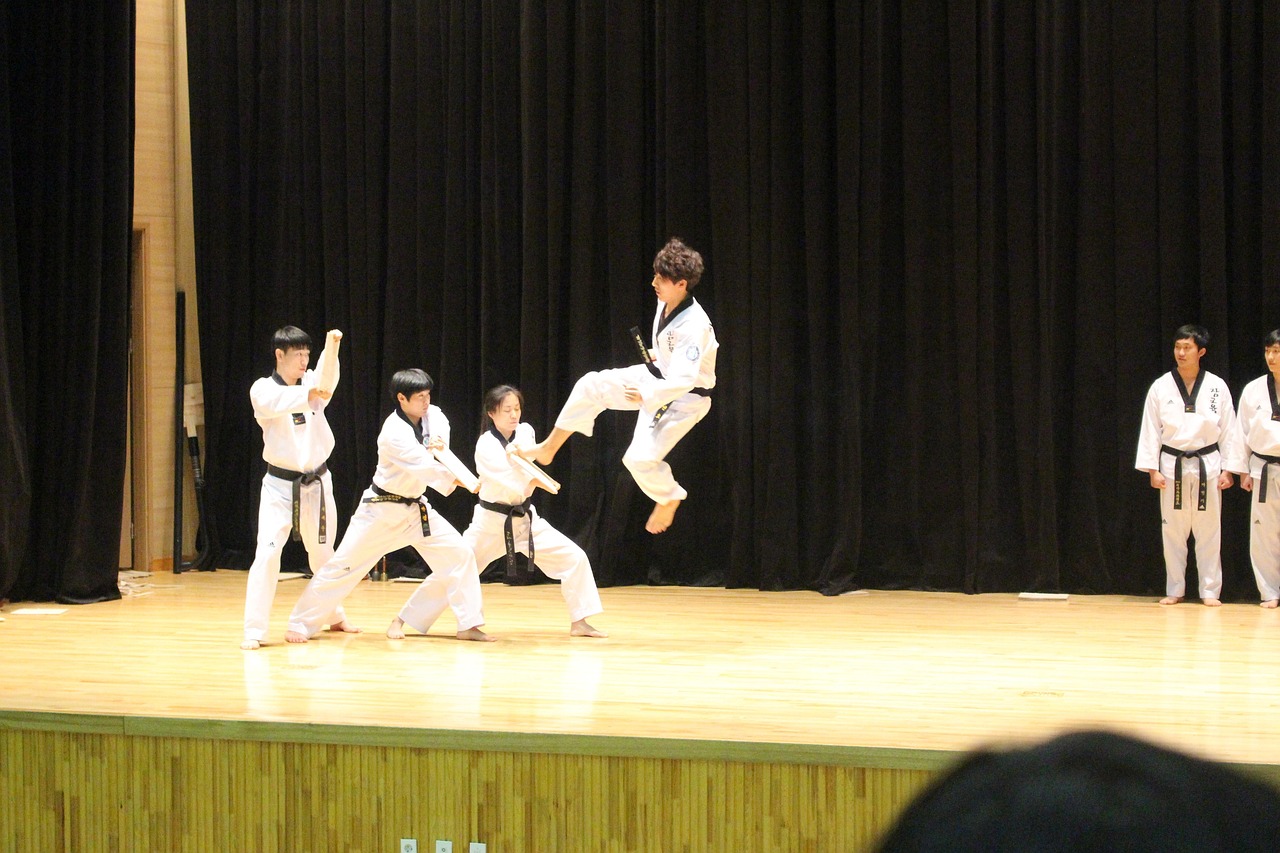
to play sports - 태권도를 하다
taegwondoreul hada
to practice taekwondo - 축구를 하다 / 농구를 하다 / 럭비를 하다 / 하키를 하다
chukgureul hada / nonggureul hada / reokbireul hada / hakireul hada
to play soccer/basketball/rugby/hockey - 달리다 / 뛰다
dallida / ttwida
to run - 걷다
geotda
to walk - 자전거를 타다
jajeongeoreul tada
to ride a bike - 등산하다 / 하이킹하다
deungsanhada / haikinghada
to hike - 수영하다
suyeonghada
to swim - 헬스장에 가다
helseujange gada
to go to the gym - 역기를 들다 / 웨이트 트레이닝을 하다
yeokgireul deulda / weiteu teureiningeul hada
to lift weights - 유산소 운동을 하다
yusanso undongeul hada
to do cardio - 요가를 하다
yogareul hada
to do yoga - 태극권을 하다
taegeukgwoneul hada
to do tai chi - 스트레칭하다
seuteurechinghada
to stretch
Vocabulary
If you do any of those activities, you may need to know how to say: 운동화 / 러닝화 undonghwa / reoninghwa sneakers/running shoes, 등산화 deungsanhwa hiking shoes, 자전거 헬멧 jajeongeo helmet bicycle helmet, 수영복 suyeongbok swimming suit, 바벨 babel barbells, 덤벨 / 아령 deombel / aryeong dumbbells, 웨이트 벤치 weiteu benchi weight bench, 러닝머신 / 트레드밀 reoningmeosin / teuredeumil treadmill, 일립티컬 머신 / 엘립티컬 머신 illiptikeol meosin / elliptikeol meosin elliptical machine, 실내 자전거 / 헬스 자전거 sillae jajeongeo / helseu jajeongeo stationary bike, 요가 매트 yoga maeteu yoga mat, 탈의실 taruisil locker room.
Examples
- 운동을 해요?
Undongeul haeyo?
Do you play sports? - 그녀는 축구 / 농구 / 럭비 / 하키를 해요.
Geunyeoneun chukgu / nonggu / reokbi / hakireul haeyo.
She plays soccer/basketball/rugby/hockey. - 태권도 수업을 듣고 있어요.
Taegwondo sueobeul deutgo isseoyo.
I’m taking a taekwondo class. - 저는 일주일에 네다섯 번 달려요.
Jeoneun iljuire nedaseot beon dallyeoyo.
I run four or five times a week. - 매일 저녁 퇴근 후에 자전거를 타요.
Maeil jeonyeok toegeun hue jajeongeoreul tayo.
He rides his bike every evening after work. - 우리는 일 년에 몇 번 산에 가서 등산해요.
Urineun il nyeone myeot beon sane gaseo deungsanhaeyo.
We go hiking in the mountains a few times a year. - 어느 헬스장에 다녀요?
Eoneu helseujange danyeoyo?
Which gym do you go to? - 헬스장 회원권을 끊고 싶어요.
Helseujang hoewongwoneul kkeunko sipeoyo.
I want to buy a gym membership. - 많은 사람들이 헬스장에서 유산소 운동을 해요.
Maneun saramdeuri helseujangeseo yusanso undongeul haeyo.
Many people do cardio at the gym. - 일립티컬 머신을 사용해요, 아니면 러닝머신에서 달려요?
Illiptikeol meosineul sayonghaeyo, animyeon reoningmeosin eseo dallyeoyo?
Do you use the elliptical machine, or do you run on the treadmill? - 팔굽혀펴기 / 윗몸 일으키기를 하고 있어요.
Palgupyeopeogi / winmom ireukigireul hago isseoyo.
I’m doing push-ups/sit-ups. - 일주일에 두 번 벤치프레스를 해요.
Iljuire du beon benchipeureseureul haeyo.
I use the bench press twice a week. - 허리를 다쳐서 웨이트 트레이닝을 할 수 없어요.
Heorireul dachyeoseo weiteu teureiningeul hal su eopseoyo.
I can’t lift weights because I injured my back. - 제가 다니는 헬스장에서는 요가 수업을 해요.
Jega danineun helseujangeseoneun yoga sueobeul haeyo.
My gym offers yoga classes. - 어떤 사람들은 매일 아침 공원에서 태극권을 해요.
Eotteon saramdeureun maeil achim gongwoneseo taegeukgwoneul haeyo.
Some people do tai chi in the park every morning. - 운동하기 전에 스트레칭을 해요.
Undonghagi jeone seuteureching-eul haeyo.
I stretch before I work out.
Vocabulary Note
In Korean, 헬스장 helseujang is the most common word for a gym or fitness center. 헬스 helseu, borrowed from English health, is often used to refer specifically to gym-based workouts and weight training. 헬스하다 helseuhada means to work out at the gym. 근력 운동 geullyeok undong means strength training, while 유산소 운동 yusanso undong means aerobic exercise / cardio.
등산 deungsan, literally mountain climbing, is commonly used for recreational mountain hiking, an especially popular activity in Korea. 하이킹 haiking is also understood, but 등산 is often more natural when describing hikes in the mountains.
For gym memberships, 회원권을 끊다 hoewongwoneul kkeunta is a common conversational expression meaning to sign up for or purchase a membership, despite 끊다 also meaning to cut or to stop in other contexts.
Health Checkups
Finally, you can’t talk about health and fitness in Korean without talking about regular health checkups. Let’s start with some vocabulary: 의사 uisa doctor; 간호사 ganhosa nurse; 의원 / 병원 uiwon / byeongwon medical clinic / hospital or medical clinic; 진료 예약을 하다 jillyo yeyageul hada to make a doctor’s appointment; 건강검진을 받다 geongang geomjineul batda to have a health checkup; 신체검사를 받다 sinchegeomsareul batda to have a physical examination; 혈액 검사 hyeoraek geomsa blood tests; 혈압 hyeorap blood pressure.
- 다음 주에 연례 건강검진을 받아요.
Daeum jue yeollye geongang geomjineul badayo.
I have my yearly physical next week. - 의사 선생님이 제 혈압을 재요.
Uisa seonsaengnimi je hyeorabeul jaeyo.
The doctor takes my blood pressure. - 의사 선생님이 청진기로 제 폐 소리를 들어요.
Uisa seonsaengnimi cheongjingiro je pye sorireul deureoyo.
The doctor listens to my lungs. - 의사 선생님이 혈액 검사를 받으라고 하셨어요.
Uisa seonsaengnimi hyeoraek geomsareul badeurago hasyeosseoyo.
The doctor ordered blood tests for me. - 콜레스테롤 수치가 높아요.
Kolleseuterol suchiga nopayo.
I have high cholesterol. - 혈압이 높아요 / 낮아요.
Hyeorabi nopayo / najayo.
He has high/low blood pressure. - 어떤 약을 드세요?
Eotteon yageul deuseyo?
What medications do you take? - 콜레스테롤을 낮추는 약을 먹어요.
Kolleseuteroreul nachuneun yageul meogeoyo.
I take medication for cholesterol. - 그녀는 고혈압 약을 먹어요.
Geunyeoneun gohyeorap yageul meogeoyo.
She takes medication for high blood pressure. - 많은 사람들이 항우울제를 복용해요.
Maneun saramdeuri hanguuljereul bogyonghaeyo.
Many people take anti-depressants.
Usage Note
When addressing or referring respectfully to a doctor, Koreans commonly say 의사 선생님 uisa seonsaengnim or simply 선생님 seonsaengnim.
Korea has an extensive system of preventive medical examinations. 건강검진 geongang geomjin refers to a routine health screening or checkup. 정기 건강검진 jeonggi geongang geomjin means regular health checkup, and 종합 건강검진 jonghap geongang geomjin refers to a comprehensive medical screening.
Finally, Korean commonly uses 약을 먹다 yageul meokda, literally to eat medicine, when talking about taking oral medication. The honorific form is 약을 드시다 yageul deusida, while 약을 복용하다 yageul bogyonghada is a more formal medical expression meaning to take medication. The distinction is useful when speaking to medical professionals or discussing someone else’s health.

Get on the road to speaking Korean with the Language Garage!
We hope you’ve enjoyed learning how to talk about health and fitness in Korean. If you’d like to learn more:
- Follow us on Facebook, LinkedIn, BlueSky, Twitter, Threads, Mastodon, Instagram, or Pinterest. We publish lots of Korean vocabulary, grammar, and culture notes, so it’s a great way to pick up some new vocabulary and practice.
- Check out our other posts on Korean language, culture, and more.
- Enroll in affordable, flexible, and personalized private online Korean lessons or sign up for a small group online Korean class.
- Create a free Language Garage account to access tons of Korean vocabulary, grammar, and culture.
Image by Andrew Yuan from Pixabay